Choosing the right software development company in Singapore that businesses trust requires careful planning, clear business goals, and a structured evaluation process.
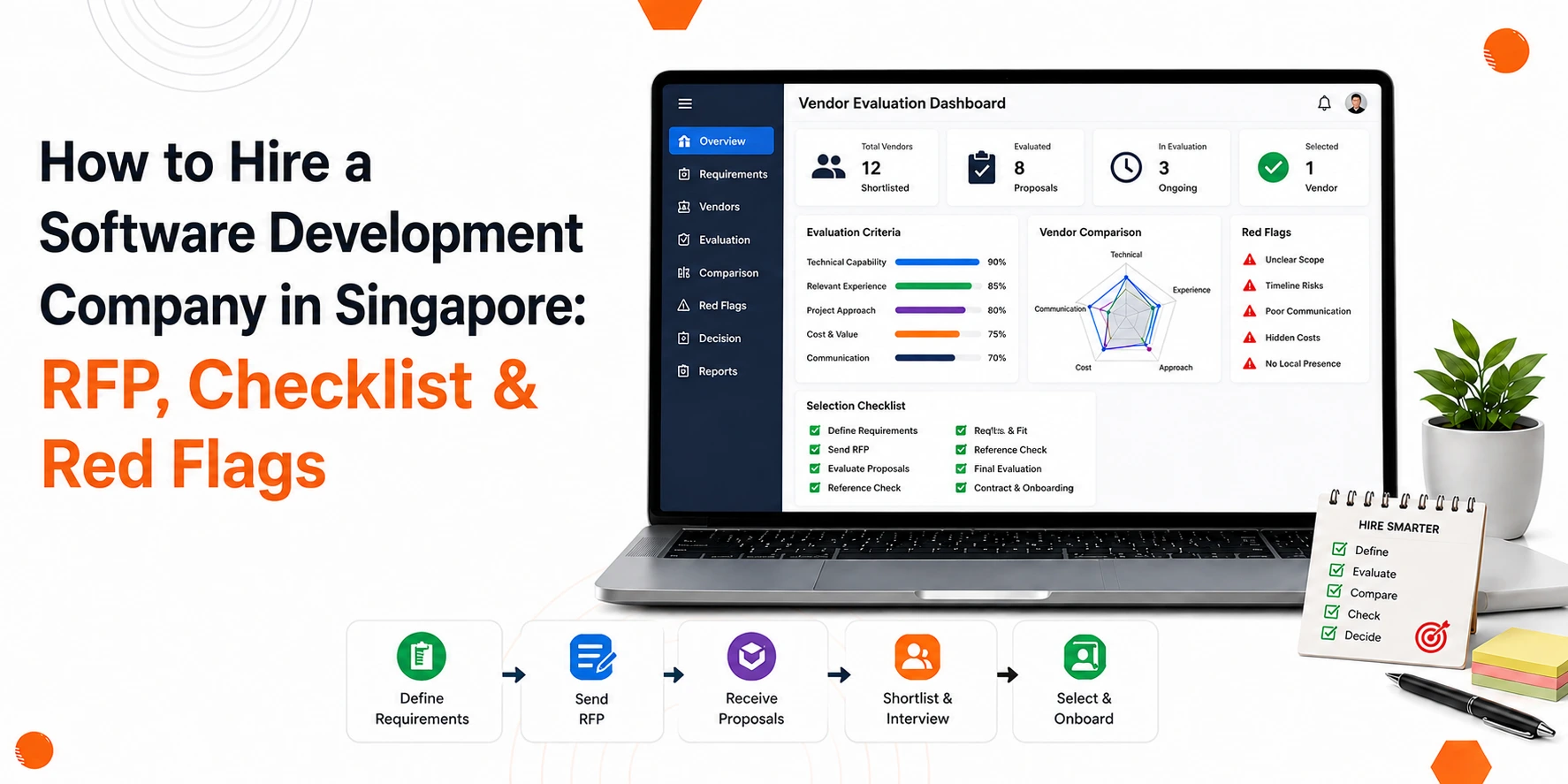
The process of finding a software partner who delivers dependable software and long-term value requires you to use a vendor checklist, ask specific questions, and watch out for typical warning signs.
Singapore maintains a powerful technology industry because multiple providers from both local and regional areas deliver software development solutions to this market.
The process of choosing from multiple options becomes difficult because people face an abundance of choices. The guide provides instructions for selecting partners while enabling users to create RFPs, apply software vendor checklists, and detect warning signs before they enter into contracts.
Build Custom Software That Fits Your Business
From CRM to inventory systems — we design solutions around your workflow, not the other way around.
Why Choosing the Right Software Development Company Matters
Choosing the right software development company helps reduce project risks, control costs, and deliver software that meets your business goals. A reliable partner should understand your requirements, communicate clearly, and provide long-term support.
Software is more than just code. The system enables business operations to run smoothly while enhancing customer satisfaction and supporting organisational expansion.
A software development company needs to grasp your business objectives before they start creating any code. The recommended solutions must address actual business issues instead of creating extra system components.
You need to pick the correct partner for your customer portal development and inventory management system creation, mobile app development, and enterprise software implementation because this selection process helps decrease project risks and leads to better results for the future.
Also Read: What is Software Development
Define Your Business Goals Before Contacting Vendors
Clear business goals help software vendors understand your expectations and provide accurate proposals. When your requirements are well defined, it becomes easier to compare different companies and avoid costly changes later.
Ask yourself:
- What business problem are you solving?
- Who will use the software?
- Which processes should become easier?
- What systems need integration?
- What budget have you set?
- When do you need the project completed?
Clear goals help vendors provide realistic proposals instead of rough estimates.
For example, saying “We need a mobile app” is too broad.
Instead, explain:
- Who will use it
- the main features
- expected number of users
- security needs
- existing software, it should connect with
This creates better discussions from the beginning.
Software Vendor Checklist Before Hiring
Using a software vendor checklist allows you to compare companies using the same criteria. It helps you focus on experience, technical capability, communication, and support instead of marketing claims alone.
Relevant Industry Experience
Has the company completed projects similar to yours? Experience in your industry means they already understand common business challenges and regulations. Ask for examples that match your project rather than unrelated case studies.
Technical Skills
Review their technical capabilities.
Look for experience in:
- web development
- mobile development
- cloud technologies
- system integration
- database management
- security
The best solution depends on your business needs rather than the latest technology.
Development Process
Ask how projects are managed.
A structured process usually includes:
- planning
- design
- development
- testing
- deployment
- ongoing support
Clear processes reduce misunderstandings throughout the project.
Communication
Good communication often determines project success.
Ask questions such as:
- Who will manage the project?
- How often will meetings take place?
- How are progress updates shared?
- How are changes handled?
Regular communication helps avoid surprises.
Quality Assurance
Testing should not happen only at the end.
Ask how the company manages:
- functional testing
- security testing
- performance testing
- user acceptance testing
Strong quality practices improve software reliability.
Security Practices
Security should be considered from the beginning.
Ask how the company protects:
- customer information
- business data
- user accounts
- system access
This is especially important for organisations handling confidential information.
Support After Launch
Software needs maintenance after deployment.
Clarify:
- support hours
- bug fixes
- future enhancements
- response times
- maintenance agreements
A project does not end when the software goes live.
Questions to Ask Before You Hire a Development Company in Singapore
The right questions will help you learn about the vendor’s operational methods when you want to hire a software development company in Singapore. The answers they provide will show their professional background, their way of communicating, and their potential to complete your project successfully.
Some useful questions include:
- Have you completed similar projects?
- Can you share client references?
- How do you estimate project costs?
- What happens if requirements change?
- Who owns the source code?
- How do you manage project risks?
- What level of support is included?
- How is project progress reported?
- How do you handle software testing?
- What security measures do you follow?
The answers often reveal how the company works.
Common Red Flags When Choosing a Software Vendor
Knowing the warning signs before signing a contract can help you avoid delays, unexpected costs, and poor-quality software. A trustworthy vendor should be transparent, organised, and willing to answer your questions.
Unrealistic Promises
Be cautious if a vendor promises to deliver complex software in an unusually short time. Quality software requires planning, testing, and collaboration. If something sounds too good to be true, it usually is.
Vague Pricing
A detailed proposal should explain:
- software development costs
- support costs
- maintenance
- optional services
Hidden charges often appear when pricing lacks detail.
No Clear Process
Professional companies explain their delivery process from start to finish. If the process seems unclear, project risks increase.
Limited Communication
Delayed responses during the sales stage often become bigger problems after the project begins. Communication should be prompt and consistent.
No Client References
Established companies should be able to provide references or case studies. If they cannot demonstrate previous work, ask why.
Poor Requirement Gathering
A good partner asks many questions before giving estimates. If a company provides a fixed quote after a short conversation, they may not fully understand your requirements.
No Maintenance Plan
Software requires updates, security patches, and improvements. Avoid vendors who disappear once the project is delivered.
How to Compare Different Proposals
Comparing proposals using the same evaluation criteria makes it easier to choose the right vendor. Do not focus only on price. Consider experience, technical capability, support, security, and long-term value.
Instead, compare each proposal across several factors.
| Evaluation Area | What to Compare |
|---|---|
| Experience | Similar projects and industry knowledge |
| Technical Solution | Proposed architecture and features |
| Timeline | Realistic delivery schedule |
| Cost | Breakdown of all charges |
| Communication | Project management approach |
| Support | Maintenance and post-launch services |
| Security | Data protection practices |
| Scalability | Ability to support future growth |
A balanced evaluation often produces better long-term value.
Local or Regional Vendor?
Many organisations choose a software development company in Singapore that businesses trust because local providers understand the market, regulations, and business environment.
Regional service providers can produce high-quality work when they establish effective communication systems and possess the required industry experience.
The selection of the optimal choice depends on your project needs, financial resources, and your preferred operating style. You need to evaluate both the company’s operational expertise, its technical capabilities, and its understanding of your business objectives, besides its physical position.
Final Thoughts
Singapore organisations need to search beyond price comparisons because they should find their ideal software development company. The beginning of any successful project requires organisations to establish clear business goals while creating an RFP, conducting vendor assessments, and setting achievable targets.
The Software RFP template from Singapore businesses provides structured requirement templates that they can use to build their Software RFP document. The software vendor checklist helps you evaluate different providers through equal assessment methods.
Singapore businesses need to perform detailed vendor assessments before they select software development services for their application development needs and custom enterprise software solutions. The evaluation process of software development options will help you reduce project risks, which leads to better project results.