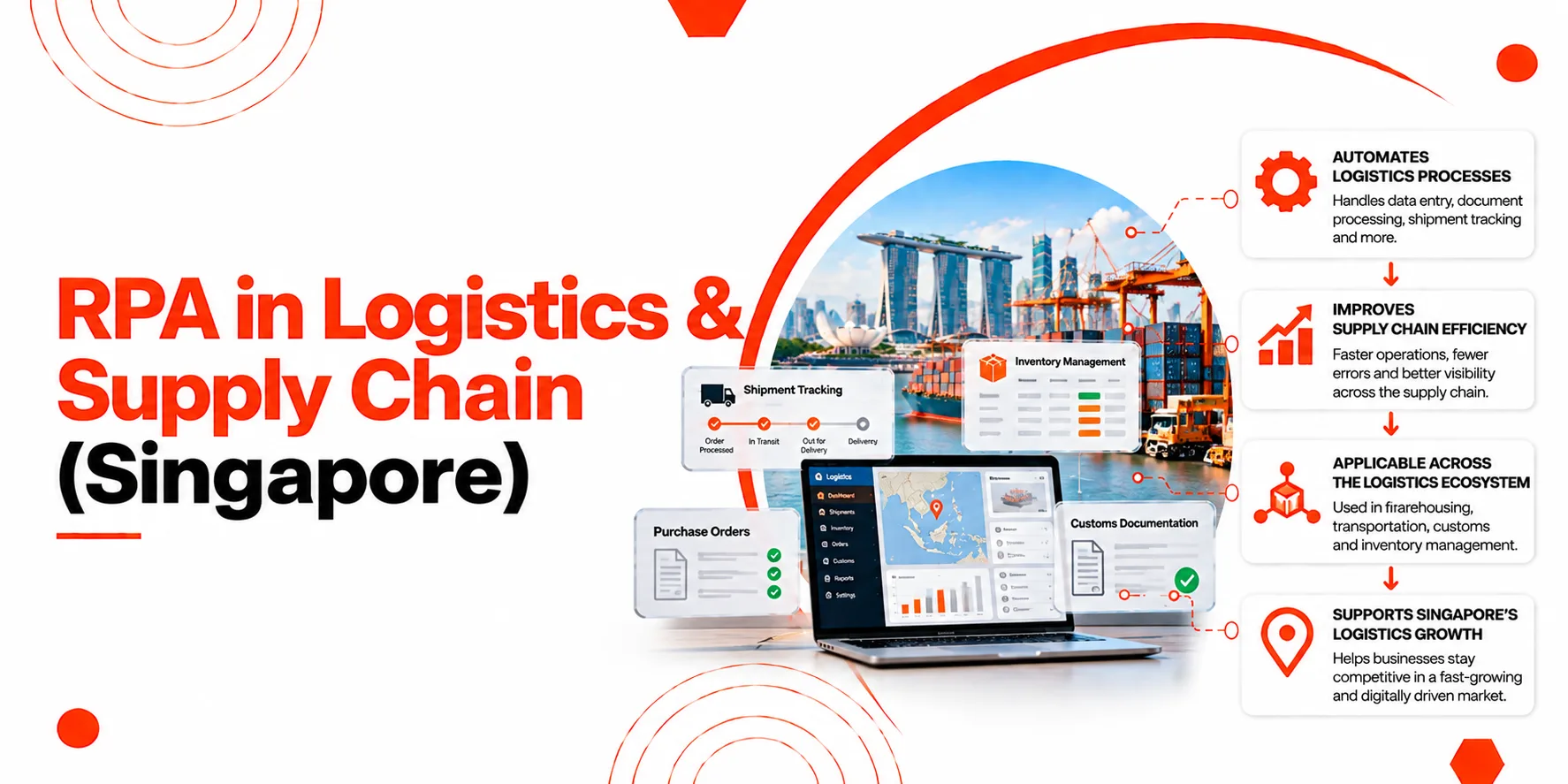
Logistics keeps Singapore moving because every day businesses handle orders, stock, shipments, invoices, warehouse tasks, and deliveries. Each step creates data, and each step also involves routine work that can take hours from an operations team.
This is where RPA logistics can make a difference.
Robotic Process Automation (RPA) helps businesses automate repetitive, rule-based digital tasks. Instead of staff copying order details between systems, checking standard documents, or updating delivery records by hand, software robots can handle these steps.
For logistics operations, the goal is simple: reduce manual work, cut errors, and help teams process more orders without adding the same amount of administrative work.
The value also goes beyond the warehouse, as RPA can connect order management, inventory processes, transport operations, and delivery workflows. This makes it an important part of wider supply chain automation.
For Singapore logistics companies facing high service expectations and complex regional supply chains, this can create a more connected way of working.
Build Custom Software That Fits Your Business
From CRM to inventory systems — we design solutions around your workflow, not the other way around.
What Is RPA and Why Does It Matter in Logistics?
RPA is a form of business process automation. It uses software robots to complete structured tasks based on set rules. These robots can work with digital systems in much the same way an employee would when handling routine data.
For example, imagine a logistics employee receives hundreds of shipment records each day. The employee may need to open each record, copy key information, enter it into another business system, and update the shipment status.
RPA can automate much of this workflow.
This matters because logistics involves many repetitive processes like order entry, invoice checks, inventory updates, shipment records, and delivery status updates, all of which involve data moving between systems.
When staff perform each task by hand, errors can enter the process. A wrong order number or delivery address may lead to delays and extra work.
With RPA logistics, businesses can create rules for these repeatable processes and allow employees to focus on tasks that need human judgement.
Read About: What Is RPA?
Why Are Singapore Logistics Companies Looking at RPA?
Singapore is a major trade and logistics hub. Businesses operating here often manage shipments across several countries, transport partners, warehouses, and customer groups.
Growing Administrative Work
This creates a large amount of administrative work, but the challenge is not always a lack of business systems.
Many companies already use separate systems for warehouse operations, orders, accounting, transport, and customer management.
Connecting Different Business Systems
The problem is getting information from one system to another, while older platforms may not connect with newer systems.
Some processes may still depend on spreadsheets, emails, or manual data entry.
Staff then become the link between systems.
Closing Gaps With RPA
RPA for logistics companies in Singapore can help close some of these gaps without forcing businesses to replace every existing platform.
A software robot can take information from one system, follow defined steps, and enter that information into another system. This can make RPA useful for businesses that want to improve existing workflows while planning wider digital projects.
Expanding Automation Across Logistics
Businesses exploring RPA services should therefore look beyond single tasks. The larger opportunity is to find repeated processes across logistics operations that consume staff time and affect service quality.
Which Logistics Processes Can RPA Automate?
There is no single RPA workflow that fits every logistics business. The best starting points tend to be processes with high volumes, clear rules, and repeated manual steps.
RPA Improves Order Processing
Order processing often involves several systems.
A customer places an order. The logistics team receives the details. Staff may then check product information, enter the order into an internal system, confirm stock, and create the required records.
When order volumes rise, manual processing becomes harder to manage.
RPA can collect structured order information and enter it into the correct systems. It can also check whether required fields are present before the order moves to the next stage.
This helps reduce repeated data entry.
It can also speed up the journey from order receipt to warehouse processing. That matters because delays at the start of an order can affect picking, packing, and delivery later.
RPA Support Inventory Management
Inventory data changes throughout the day.
Goods come in, move around the warehouse, go out with orders, and return when customers send them back.
Keeping records aligned can require frequent updates.
One of the common RPA use cases is transferring inventory information between systems or preparing routine stock reports. Robots can collect data from defined sources, update records, and flag cases that do not match set rules.
This does not remove the need for warehouse management systems or staff oversight. Instead, RPA can handle repetitive administrative work around them.
That can give operations teams more time to deal with shortages, damaged stock, and other issues that require decisions.
How Does RPA in Warehousing and Delivery Work?
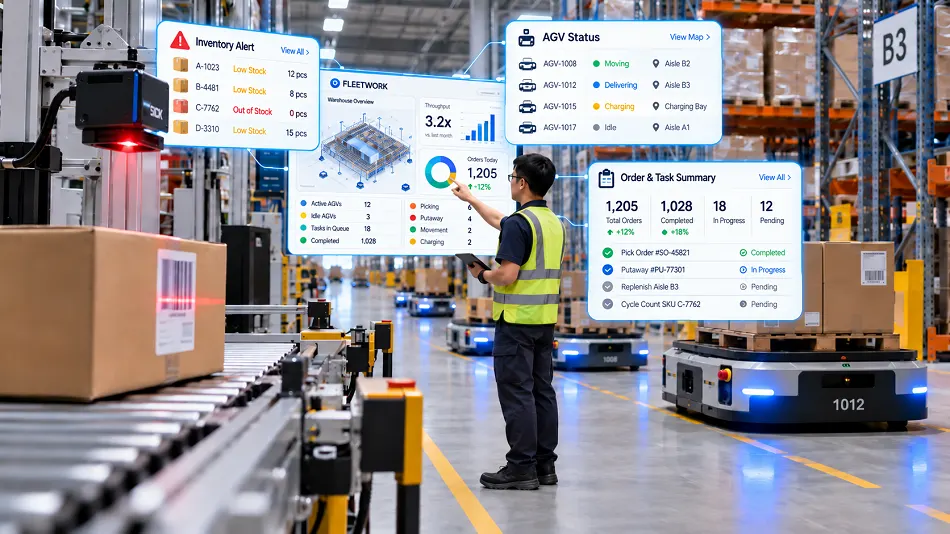
The value of automation becomes clear when businesses connect warehouse activity with the final delivery stage.
RPA in warehousing and delivery can support the flow of information from the moment an order enters a warehouse until the customer receives it.
Warehouses Use RPA
Warehouses depend on accurate information.
Before staff pick an order, they need the correct order and stock details. After packing, shipping records are prepared. Once the goods are sent, stock and order details are updated.
RPA can support tasks such as:
- Creating or updating warehouse records from incoming orders
- Transferring picking and packing information between systems
- Updating inventory records after dispatch
- Preparing standard shipping documents
- Recording returns in internal systems
- Producing routine warehouse reports
These supply chain automation examples show why RPA should not be viewed as a replacement for physical warehouse equipment. Its main role is often behind the scenes, where data needs to move between business processes.
RPA Improves Delivery Management
A packed parcel is only part of the customer journey. The next challenge is getting it to the right place at the expected time.
Delivery operations create another set of repetitive tasks.
Teams may need to prepare dispatch information, send order details to delivery partners, update shipment status, and record proof of delivery.
RPA can help transfer this information across systems.
For example, once a warehouse marks an order as ready for dispatch, an automated workflow can collect the required delivery data and prepare it for the next system. After delivery, another process can update the order record with the new status.
This creates a useful link between warehouse automation and delivery management.
For logistics operations, that connection matters. Customers do not judge the warehouse and delivery team as separate processes. They see one order journey.
What Are Some Supply Chain Automation Examples Using RPA?
RPA can support more than warehouse and delivery operations. It can work across several stages of a supply chain.
Consider invoice processing. A logistics company may receive invoices from carriers and other suppliers. Staff need to collect details, compare them with internal records, and send approved information to the finance process.
RPA can help extract structured information and move it through predefined checks.
Shipment tracking is another example. Staff may spend time checking shipment records and updating internal systems. Automated processes can collect available status information and update records based on set rules.
Other supply chain automation examples include processing standard purchase orders, preparing regular reports, updating customer records, and handling structured return requests.
The common factor is repetition.
If employees follow the same digital steps hundreds of times, the process may be suitable for RPA.
What Benefits Can RPA Bring to Logistics Operations?
RPA can support logistics teams by reducing routine work and making daily processes easier to manage.
Saving Time on Routine Work
One key benefit of RPA is saving time.
Small admin tasks may take only a few minutes. But when staff do them hundreds of times each week, they take up many hours.
Automation can handle these routine tasks and give logistics teams more time for other important work.
Improving Accuracy and Consistency
Accuracy is another benefit. Manual copying and data entry can lead to mistakes, especially when employees work across large volumes of information. Rule-based automation can reduce errors in structured processes.
RPA can also support consistency. The same defined process is followed for each transaction, which can make records easier to manage.
Supporting Higher Workloads
Scalability is another consideration. Order volumes can change during sales periods, holidays, or business growth. Automated workflows can help businesses process higher digital workloads without increasing manual administration at the same rate.
The result is not just a lower workload. It can also mean smoother handovers between order, warehouse, and delivery processes.
Which Logistics Tasks Should Businesses Automate First?
Choosing the right processes can help logistics companies gain more value from automation while keeping implementation manageable.
Identifying Repetitive Processes
Not every process should be automated.
A good RPA project starts by looking for work that is repetitive, predictable, and based on clear rules.
For example, copying standard order information between two systems could be a strong candidate. Resolving a complex delivery complaint would not be.
Measuring the Value of Automation
Businesses should examine how much time a process takes, how often it occurs, and how many errors it creates.
The process should also be stable, as automating a workflow that changes every few weeks can create more maintenance work.
Starting With a Clear Process
Start with a process that has clear boundaries and a measurable outcome. Once the workflow performs well, the business can apply what it has learned to other areas. This approach makes automation easier to manage and gives operations teams time to adapt.
How Can RPA Work With Existing Logistics Software?
RPA can connect existing systems and automate routine data movement without requiring companies to replace their entire technology setup.
Working Across Existing Systems
A common concern is whether automation requires a complete technology replacement. In many cases, it does not. RPA can work across existing digital systems by following predefined actions. This can make it useful for companies with a mix of older platforms and newer applications.
Knowing When RPA Is Not Enough
Yet RPA should not become a permanent fix for every system problem.
If a business relies on many manual workarounds because its core platforms no longer meet operational needs, broader software development in Singapore may be worth considering. A custom integration, modern logistics platform, or new delivery management solution may solve the underlying issue.
Combining RPA and Software Development
The right choice depends on the process.
RPA is often useful when a stable process needs automation across existing systems. Software development may make more sense when a business needs new functions, deeper integration, or a redesigned workflow.
In some cases, the two approaches can work together.
What Challenges Should Logistics Teams Consider Before Using RPA?
Understanding possible challenges before implementation can help logistics teams build automated processes that remain reliable as operations change.
Standardising Processes Before Automation
RPA works best when the process behind it is clear.
If employees use different steps to complete the same task, automating it can be difficult. The business may need to standardise the process first.
Managing Data and Security
Poor data can also cause problems. Missing fields, inconsistent formats, and duplicate records may interrupt automated workflows.
Security and access control need attention as well. Software robots may interact with operational or customer information. Businesses should control which systems and records each automated process can access.
Maintaining Automated Workflows
- Maintenance is another factor.
- Business systems change.
- Screens, fields, and workflows can be updated.
- An RPA process may need changes when the systems around it change.
- This is why automation needs ownership.
Teams should know who monitors each process, how exceptions are handled, and what happens when a workflow fails.
How Can Businesses Build a Practical RPA Logistics Strategy?
A clear strategy helps businesses move from automating individual tasks towards improving connected logistics processes.
Mapping the Logistics Journey
Start with the operation, not the technology.
Map the journey from order creation to final delivery, so look at where staff spend time entering, checking, and moving information.
Then identify repetitive tasks with clear rules.
Setting Clear Automation Goals
The next step is to define the result.
- Do you want to reduce order processing time?
- Cut manual entries?
- Improve delivery status updates?
- Reduce invoice handling work?
Clear goals make it easier to measure the impact.
It is also useful to involve the employees who perform the process each day. They know where delays occur and which exceptions appear most often.
Expanding Automation Across the Supply Chain
After the first workflow is stable, businesses can explore more RPA use cases across inventory, warehousing, finance, customer service, and delivery management.
This creates a gradual path towards broader supply chain automation.
What Does the Future of RPA Logistics Look Like in Singapore?
As logistics networks become more connected, RPA can help Singapore businesses manage growing data volumes and link processes across the order-to-delivery journey.
Creating More Connected Logistics Operations
Logistics is becoming more connected. Customers expect clear order information, reliable deliveries, and fewer delays. At the same time, operations teams need to control costs and handle growing volumes of data.
RPA can support this shift by removing repetitive digital work from key logistics processes.
The strongest use cases are often not the most complex. They are the everyday tasks that employees repeat across orders, warehouses, transport, and deliveries.
Connecting the Supply Chain
For Singapore logistics businesses, the opportunity is to connect these improvements across the supply chain.
An automated order process can send cleaner information to the warehouse. Better warehouse data can support dispatch. Faster dispatch updates can improve delivery management. Completed delivery records can then flow back into customer and finance processes.
That is where RPA logistics becomes more than task automation. It becomes part of a connected operations model.
Building a Practical Path Forward
The goal should not be to automate every task. It should be to remove repetitive work where automation creates a clear operational benefit.
For logistics teams, that means starting with processes that consume time, follow fixed rules, and affect the order-to-delivery journey. With the right approach, RPA can help build a supply chain where information moves with less manual effort, and teams have more time to focus on the work that needs human judgement.
Conclusion
Overall, for logistics companies in Singapore, automation does not need to start with a major change. It can begin with simple, repetitive tasks that take time away from operations teams.
RPA logistics can reduce manual data entry, improve accuracy, and connect information across orders, inventory, warehouses, and deliveries. When used as part of wider supply chain automation, it can also help businesses create smoother workflows from order processing to final delivery.
The key is to start with clear processes that have measurable results. Businesses can then expand automation based on their needs and explore more RPA use cases across the supply chain.
As logistics operations grow, connected processes will become more important. The right approach to RPA in warehousing and delivery can help Singapore businesses reduce routine work, manage higher order volumes, and give their teams more time to focus on customers and operational decisions.