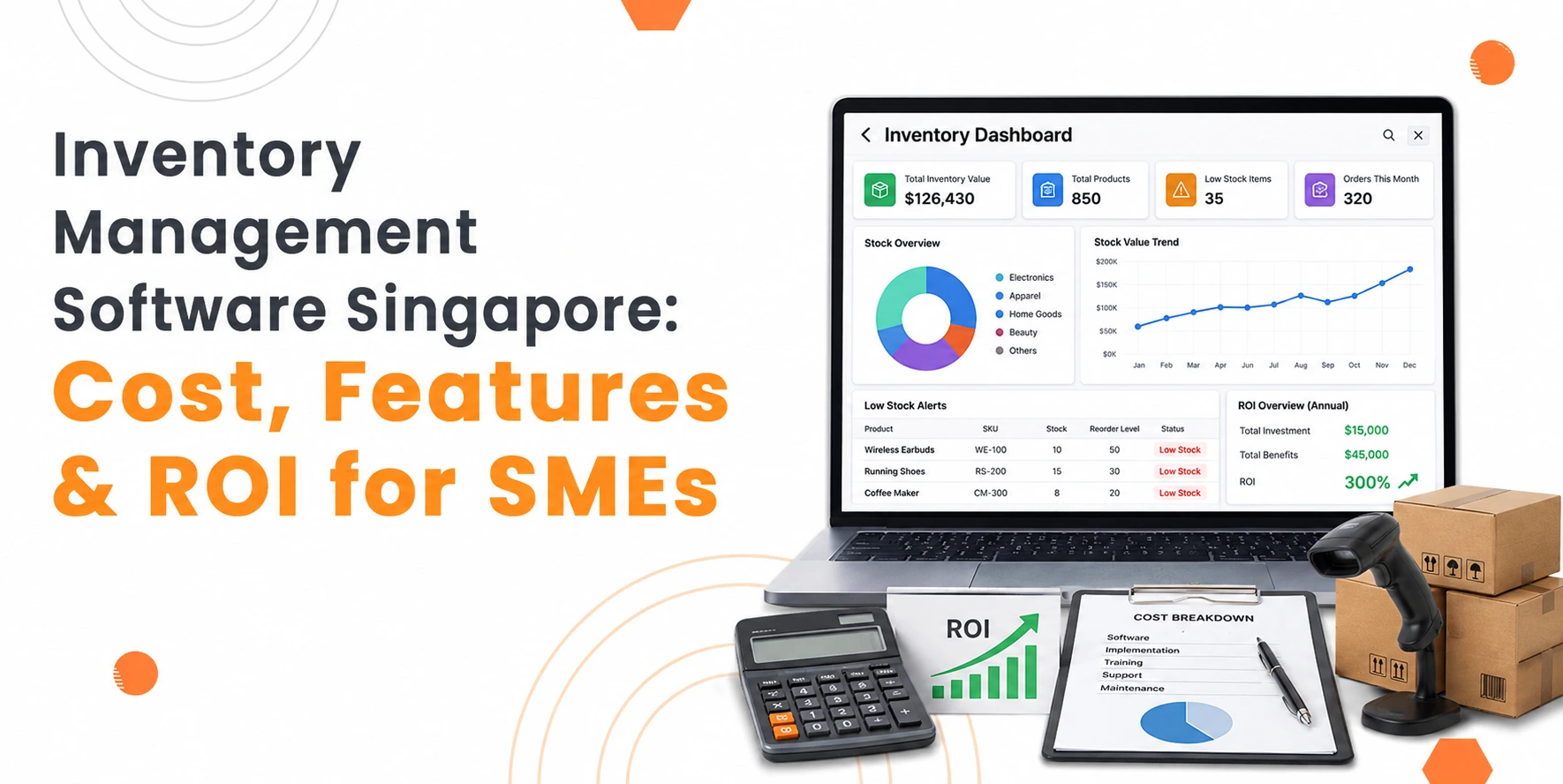
The inventory management software cost in Singapore varies depending on business size, required features, deployment type, and customisation. Investing in the right solution can improve stock accuracy, reduce operational costs, and deliver long-term value for SMEs.
Many SMEs in Singapore still rely on spreadsheets or manual methods to manage inventory. While these approaches may work for small operations, they often become difficult to manage as a business grows. Stock errors, delayed order fulfilment, and poor inventory visibility can affect both productivity and customer satisfaction.
This guide explains what inventory management software is, the common challenges faced by SMEs, the essential features to look for, pricing factors, and how the right solution can support long-term business growth.
Build Custom Software That Fits Your Business
From CRM to inventory systems — we design solutions around your workflow, not the other way around.
What Is Inventory Management Software?
Inventory management software is a digital system that helps businesses track, organise, and manage stock in real time.
Inventory control software helps businesses track, manage, and organise stock in one system. It gives companies better control over inventory movement, storage, purchasing, and sales.
Instead of updating spreadsheets manually, businesses can monitor stock levels in real time. The software records inventory changes automatically when products enter or leave storage.
An inventory management tool also helps businesses avoid overstocking and stock shortages. This improves planning and reduces losses. Some of the most important Features in Inventory Management Software help businesses improve stock visibility, automate routine tasks, and make better decisions. Common Inventory Management Software features include:
- Real-time stock tracking
- Barcode and QR code scanning
- Supplier management
- Purchase order tracking
- Inventory reporting
- Multi-location inventory control
Many SMEs now use an inventory tool for SMEs in Singapore to simplify warehouse operations and improve stock accuracy.
What Challenges Do SMEs in Singapore Face With Inventory Management?
SMEs in Singapore often face stock errors, inventory shortages, overstocking, and poor inventory visibility. Inventory management creates many daily problems for growing businesses.
Manual Stock Tracking Errors
Many SMEs still depend on manual updates. Staff may enter the wrong stock numbers or forget to update records. These mistakes affect purchasing and sales decisions.
Overstocking and Stock Shortages
Without proper tracking, businesses may buy too much inventory or run out of fast-selling products. Both situations affect profits.
Poor Inventory Visibility
Businesses with several warehouses or retail locations often struggle to track stock accurately. Teams may not know where the inventory is stored.
This is why many companies invest in inventory tracking solutions in Singapore to improve stock visibility across locations.
Slow Order Fulfilment
When stock information is unclear, order processing slows down. This can frustrate customers and delay deliveries.
Time-Consuming Inventory Audits
Manual stock checks take time and increase workload for staff. Businesses lose productivity during physical inventory counts.
Many SMEs now switch to stock control software in Singapore to reduce these operational problems.
What Features Should Businesses Look for in Inventory Management Software?
Businesses should look for features in Inventory Management Software, such as real-time tracking, barcode scanning, reporting tools, and automated stock alerts.
Choosing the right software depends on business size, industry, and inventory needs.
Real-Time Inventory Tracking
Real-time tracking helps businesses monitor stock movement instantly. Teams can check inventory levels across warehouses, shops, or distribution centres.
Barcode and QR Code Scanning
Barcode scanning speeds up stock handling and reduces human error. Staff can process inventory faster during receiving and shipping.
Automated Stock Alerts
A good inventory management system sends low-stock alerts before products run out. This helps businesses maintain proper stock levels.
Supplier and Purchase Management
Many systems allow businesses to manage suppliers, purchase orders, and stock replenishment in one platform.
Reporting and Analytics
Detailed reports help businesses understand sales trends, stock movement, and product performance. Better reporting supports smarter purchasing decisions.
Multi-Location Inventory Management
Many SMEs in Singapore manage inventory across multiple branches or warehouses. Inventory tracking across locations improves stock planning and operational control.
Which Types of Inventory Management Systems Work Best for SMEs?
Cloud-based and scalable inventory systems work best for most SMEs in Singapore.
Different businesses require different types of inventory systems.
Cloud-Based Inventory Tool
Cloud systems allow teams to access inventory data from anywhere. These systems work well for SMEs with remote teams or multiple locations.
On-Premise Inventory Systems
Some businesses prefer systems installed directly on company servers. These systems provide greater internal control but may require higher setup costs.
Retail Inventory Systems
Retail businesses need systems that track stock movement, sales, and customer demand in real time.
Warehouse Inventory Systems
Warehouse-focused systems support large inventory volumes and complex storage operations.
Industry-Specific Inventory Solutions
Some industries require specialised inventory features. Manufacturing businesses may need production tracking, while food businesses may require expiry date monitoring.
The best inventory tool for SMEs depends on operational needs and business growth plans.
How Much Does Stock Management Software Cost in Singapore?
The inventory management software cost in Singapore depends on business size, required features, deployment type, and system complexity.
Business Size
Larger businesses often require more users, warehouse locations, and system integrations, which increases overall costs.
Features Required
Inventory management software cost varies depending on the features included. Basic systems cost less but may offer limited functionality. Advanced systems with reporting, automation, and multi-location tracking usually cost more.
Cloud vs On-Premise Systems
Inventory software cost also depends on the deployment model. Cloud systems often use monthly subscription pricing, while on-premise systems may require larger upfront investments.
Customisation and Integration
Inventory management system cost can increase when businesses require customised workflows, advanced integrations, or tailored reporting.
SMEs can select between low-cost software subscriptions, which they pay for every month, or they can dedicate larger amounts to enterprise-level software solutions.
When comparing the inventory management software cost in Singapore, businesses should focus on long-term value instead of choosing the cheapest option. A lower inventory management software price may not include the features needed to support future growth.
What Is the Real ROI of Inventory Software for SMEs?
The ROI of the inventory tool comes from lower costs, better stock accuracy, and improved business efficiency.
Many SMEs hesitate to invest in software because they focus only on upfront costs. However, the ROI of inventory tools often becomes clear over time.
Reduced Inventory Errors
Automated tracking reduces mistakes caused by manual updates. Better accuracy improves stock management.
Faster Operations
Staff members achieve quick inventory processing through their use of barcode scanning, which updates stock levels automatically.
Lower Labour Costs
Businesses spend less time on manual stock counts and paperwork.
Better Inventory Planning
Businesses can predict their future demand through accurate reports, which provide them with better forecasting abilities. This reduces excess inventory and stock shortages.
Improved Customer Satisfaction
Customers receive orders faster when inventory information remains accurate.
Better Business Decisions
Business owners use real-time inventory data to select their next stock purchases and determine which items to sell in their stores.
Over time, many SMEs recover software costs through higher efficiency and reduced operational losses.
How an Inventory System Helps Different Industries in Singapore
An inventory system helps businesses improve stock tracking, reduce waste, and manage operations more efficiently. Many industries in Singapore rely on inventory systems to manage operations such as:
Retail Businesses
Retailers use an inventory monitoring system to track sales, stock movement, and product demand across stores.
E-Commerce Companies
Online businesses require accurate inventory updates to prevent overselling products.
Warehousing and Logistics
Warehouse operators use inventory tracking solutions in Singapore to monitor inventory movement and storage allocation.
Manufacturing Businesses
Manufacturers track raw materials, production inventory, and finished products using inventory systems.
Food and Beverage Companies
Food businesses monitor inventory freshness, expiry dates, and stock rotation.
How to Choose the Right Inventory Management Software
Businesses should choose a software company that offers scalability, strong support, and industry-specific features.
Choosing the right inventory management software is important for long-term success.
Look for Industry Experience
A provider with industry knowledge understands operational challenges better.
Check Scalability
Businesses should choose software that supports future growth.
Compare Features Carefully
Not every system offers the same tools. Businesses should compare reporting, inventory tracking, and automation features.
Evaluate Customer Support
Reliable customer support helps businesses solve problems faster during implementation and daily operations.
Consider Ease of Use
Complex systems may create training difficulties for staff. User-friendly software improves adoption across teams.
Review Security and Data Protection
Inventory data is valuable. Businesses should choose systems with strong security features and backup protection.
Final Thoughts
Nowadays, businesses face increasing problems when they start tracking their inventory items manually during their expansion phase. The combination of stock errors, missing inventory, and delayed orders produces negative effects that harm both customer satisfaction and business financial results.
Most SMEs today choose an inventory monitoring system because it helps them track their stock better while they operate their business and decreases their risk of making inventory errors. The proper inventory system enables businesses to monitor their stock levels with precision while they enhance their warehouse operations and build their business expansion.
While the inventory management software may vary, many businesses see strong long-term value through improved productivity and reduced operational losses.
For SMEs looking to improve inventory control, investing in a reliable inventory tool can create better efficiency, stronger planning, and long-term business growth.