Building software is a major decision for any business. Whether you need a customer portal, a mobile app, an internal system, or a business platform, choosing the right development approach can shape the success of your project.
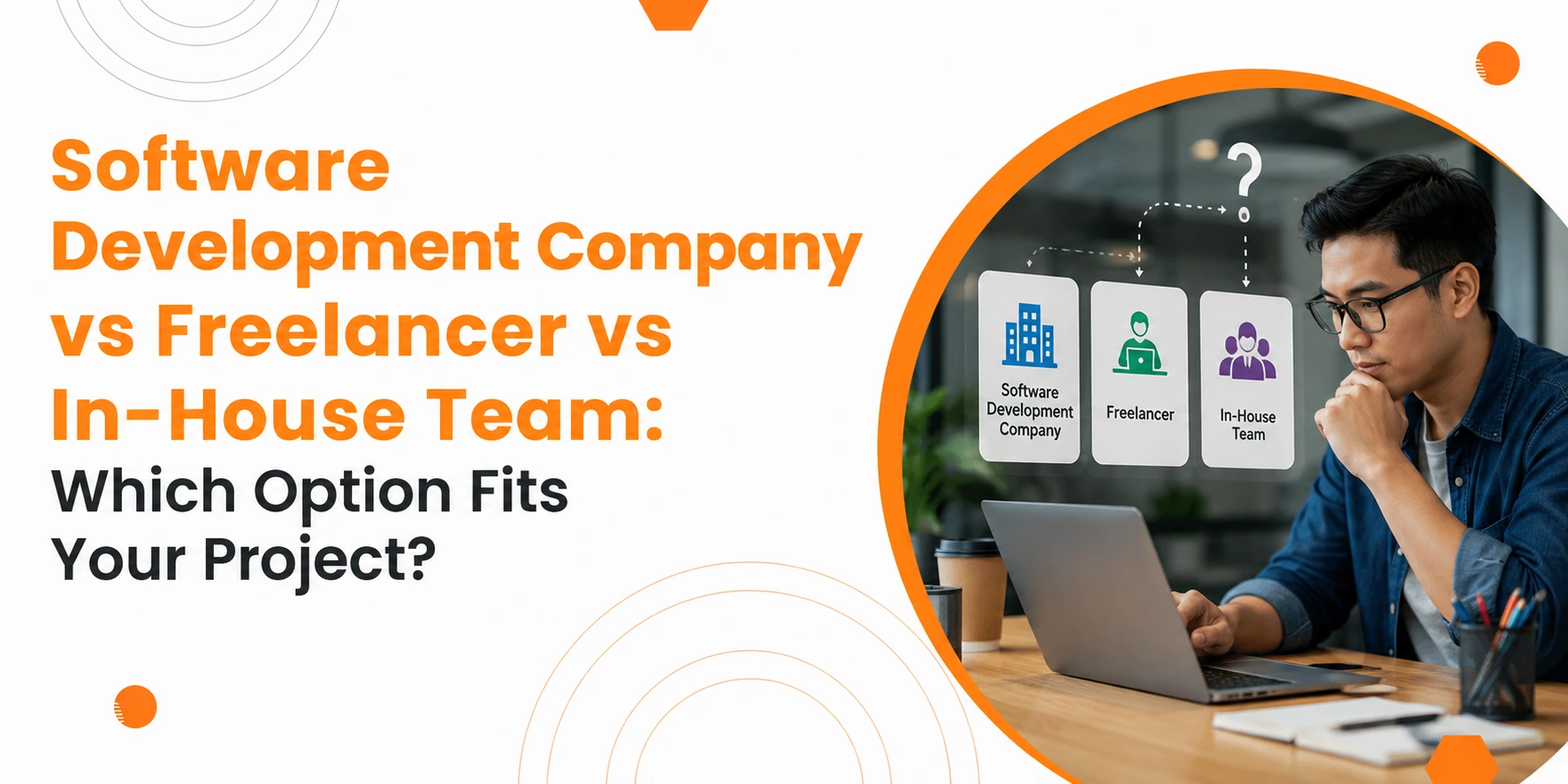
Many businesses face the same question: should you hire a software development company, work with a freelancer, or build an in-house team? Each option has strengths and challenges. The right choice depends on your budget, project size, timeline, and long-term plans.
This guide compares all three options in simple terms. By the end, you will have a clear understanding of which approach suits your business needs.
Build Custom Software That Fits Your Business
From CRM to inventory systems — we design solutions around your workflow, not the other way around.
Why Your Development Choice Matters
Software functions through its programming structure. The system enables you to operate your business while it enhances customer satisfaction and drives business growth. The developers who create your product will determine its quality level, security features, and its upcoming development path.
The wrong selection will create deadline failures while making your project more expensive and producing software that does not fulfill your requirements. The process of option evaluation will help you prevent these issues.
Understanding the Three Options
What Is a Software Development Company?
A software development company provides businesses with complete development support through its full range of software creation services. The team-based approach includes developers, designers, testers, project managers, and technical specialists who work together.
Multiple businesses maintain their software through continuous development services, which involve system maintenance, software upgrades, security enhancements, and post-release technical assistance.
The selection serves businesses that require dependable delivery systems along with permanent maintenance services.
What Is a Freelancer?
A freelancer operates as an independent professional who takes on various projects from multiple clients. Freelancers choose to focus their work on two specific specialties, which include web development, mobile applications, and user interface design.
The cost of hiring a freelancer stays lower than building an entire team for work. For small projects with simple requirements, this can be a practical choice.
The situation develops because one person needs to handle multiple tasks, which delays all work and prevents any work from starting.
What Is an In-House Team?
An in-house team consists of employees who work only for your business. You recruit developers, designers, testers, and managers as permanent staff.
This approach gives you full control over your project and daily communication. The system enables your team to develop a complete understanding of your products and operational systems.
The process of hiring and training employees, along with team management, creates a major challenge because it takes too much time and costs too much money.
Software Company vs Freelancer: Key Differences
The debate around software company vs freelancer often comes down to project complexity.
Expertise
A software company offers knowledge from different specialists. If your project requires front-end development, back-end systems, testing, design, and security, each task is handled by someone with relevant experience.
A freelancer brings personal expertise but may not cover every technical area.
Project Management
Professional development teams usually follow structured planning, testing, and reporting processes. This keeps projects organised and reduces delays.
Freelancers often manage everything themselves, from communication to development and testing.
Scalability
A company can increase team size when the project grows. A freelancer has limited working hours, making it harder to scale quickly.
Business Continuity
If one developer becomes unavailable, a software company can assign another team member.
With a freelancer, unexpected absence may pause the entire project.
In-House vs Outsourcing Software Development
Many organisations compare In-house vs. outsourcing software development before starting a major project.
Both options have clear advantages.
In-House Development
Advantages include:
- Complete control over priorities
- Fast internal communication
- Strong understanding of company goals
- Long-term technical knowledge
Challenges include:
- High recruitment costs
- Employee salaries and benefits
- Training expenses
- Office infrastructure
- Longer hiring process
Outsourcing Development
Working with a development partner allows businesses to access experienced professionals without building a large internal department.
Benefits include:
- Faster project start
- Access to different technical skills
- Lower recruitment effort
- Flexible team size
- Ongoing technical support
The success of outsourcing depends on choosing the right partner and maintaining clear communication.
How to Compare All Three Options
1. Cost
Software Development Company
The upfront investment may appear higher, but you receive a complete team, structured delivery, quality testing, and project management.
Unexpected costs are often lower because risks are managed throughout the project.
Freelancer
Freelancers usually charge lower rates, making them suitable for small projects or limited budgets.
If additional skills become necessary, you may need to hire several freelancers, increasing management effort.
In-House Team
An internal team often involves the highest long-term cost.
Expenses include:
- Recruitment
- Salaries
- Benefits
- Equipment
- Office space
- Software licences
- Employee training
2. Development Speed
Time plays an important role in every project. A software company can assign multiple specialists to different parts of the project at the same time.
A freelancer works independently, which may extend delivery time for larger projects. An in-house team can work quickly once fully established, although recruitment often delays the start.
3. Quality Assurance
Software development requires testing to achieve its desired quality level. Professional teams normally include dedicated quality assurance specialists who test the software before release.
Freelancers often perform testing themselves. The business will provide dedicated testers to its internal teams when it decides to support quality assurance initiatives.
4. Communication
Clear communication keeps projects moving. Software companies use established communication methods, which include scheduled meetings, conference calls, and particular dates for project updates and progress tracking.
Freelancers maintain direct communication with their clients during their work process. In-house teams benefit from daily interaction and immediate feedback.
5. Security
All businesses that operate on customer data or protect vital information need to create strong security systems.
A professional software development agency will apply security standards throughout its entire process, which includes planning, development, and testing stages.
Freelancers have the ability to create protected software, but they must apply their personal knowledge and skills to this process.
Internal teams provide greater control over sensitive systems because all work remains within the organisation.
6. Flexibility
Business requirements tend to evolve throughout the development process. A software company can usually adjust resources as new requirements appear.
Freelancers have limited availability, especially if they work with several clients. An internal team offers flexibility but may require additional recruitment if the workload increases.
7. Long-Term Support
Software continues to evolve after launch. Updates, security improvements, bug fixes, and feature enhancements all require ongoing attention.
Many software development services include long-term maintenance agreements. Freelancers may provide support if available, although availability varies.
Internal teams can support products continuously, provided the necessary skills remain within the business.
Which Option Works Best for Different Projects?
Small Business Website
The project stands to gain from hiring a freelancer when its features remain basic, and its scope is well-defined.
Business Management System
A custom software development company is often better suited because these projects involve planning, testing, integration, and ongoing support.
Startup Product
Startups need to develop their products quickly, while they must maintain enough space to handle their growing requirements.
People select software development companies because they let them work with entire teams instead of creating permanent employee positions.
Enterprise Platform
Enterprise software development solutions need to handle multiple users while providing strong security measures and managing complex business operations for large organisations.
The development teams that have experience, along with defined delivery processes, show better results when working on these projects.
Internal Business Applications
A business that needs ongoing software support should build an internal team because software development continues as its primary business function.
What are the Factors to Consider Before Making a Decision
Before choosing your development approach, ask yourself a few important questions.
What Is Your Budget?
A limited budget may favour freelancers for smaller projects. But larger investments often justify working with experienced development teams.
How Complex Is the Project?
Simple websites require fewer resources than enterprise platforms.
As complexity increases, having specialists in different areas becomes more valuable.
How Quickly Do You Need Delivery?
Projects with tight deadlines often benefit from teams that can work in parallel.
Will the Software Grow?
If you expect future updates, integrations, or expansion, choose an option that supports long-term growth.
Do You Need Ongoing Support?
Software rarely ends at launch. Maintenance, monitoring, and future improvements should be part of your planning.
Software Development Partner Comparison
A careful software development partner comparison should focus on more than price. Look at factors such as:
Experience
Review previous projects with similar complexity and business goals.
Technical Skills
Check whether the team has experience with the technologies your project requires.
Communication
Clear communication helps avoid misunderstandings and delays.
Development Process
A structured process improves quality, planning, and transparency.
Support
Understand what happens after launch. Good support helps keep your software secure and reliable.
When a Software Development Company Is the Best Choice
A software development company is often the right option if you need:
- A complete development team
- Strong quality assurance
- Reliable project management
- Ongoing support
- Flexible scaling
- Better risk management
Businesses developing customer platforms, enterprise systems, or long-term digital products often benefit from this approach.
When a Freelancer Is the Best Choice
A freelancer can work well when:
- The project is small
- Requirements are clear
- The budget is limited
- You only need one specialist
- Long-term support is not essential
When an In-House Team Makes Sense
Building an internal team is suitable when:
- Software is central to your business
- Continuous development is required
- Daily collaboration is important
- You have the resources to recruit and retain skilled professionals
Conclusion
Overall, businesses require different answers because their needs differ from one another. Organisations choose their best options based on their strategic goals, financial resources, and the magnitude of their projects and their planned expansion activities. Freelancers can handle small projects that have straightforward requirements.
The software development team, which operates inside the company, enables businesses to maintain full authority because they create software regularly. Software development companies provide businesses with a complete solution which includes expert knowledge, organiSed project management, scalable solutions, and ongoing maintenance services. You need to evaluate your current requirements together with your developing needs before you make any decisions.
Your business needs software that will remain useful for many years, so you must select the proper development method at the same level as selecting the appropriate technological solutions. You should research multiple options before choosing between basic development assistance and custom software development services from a trustworthy company for your extensive project needs.