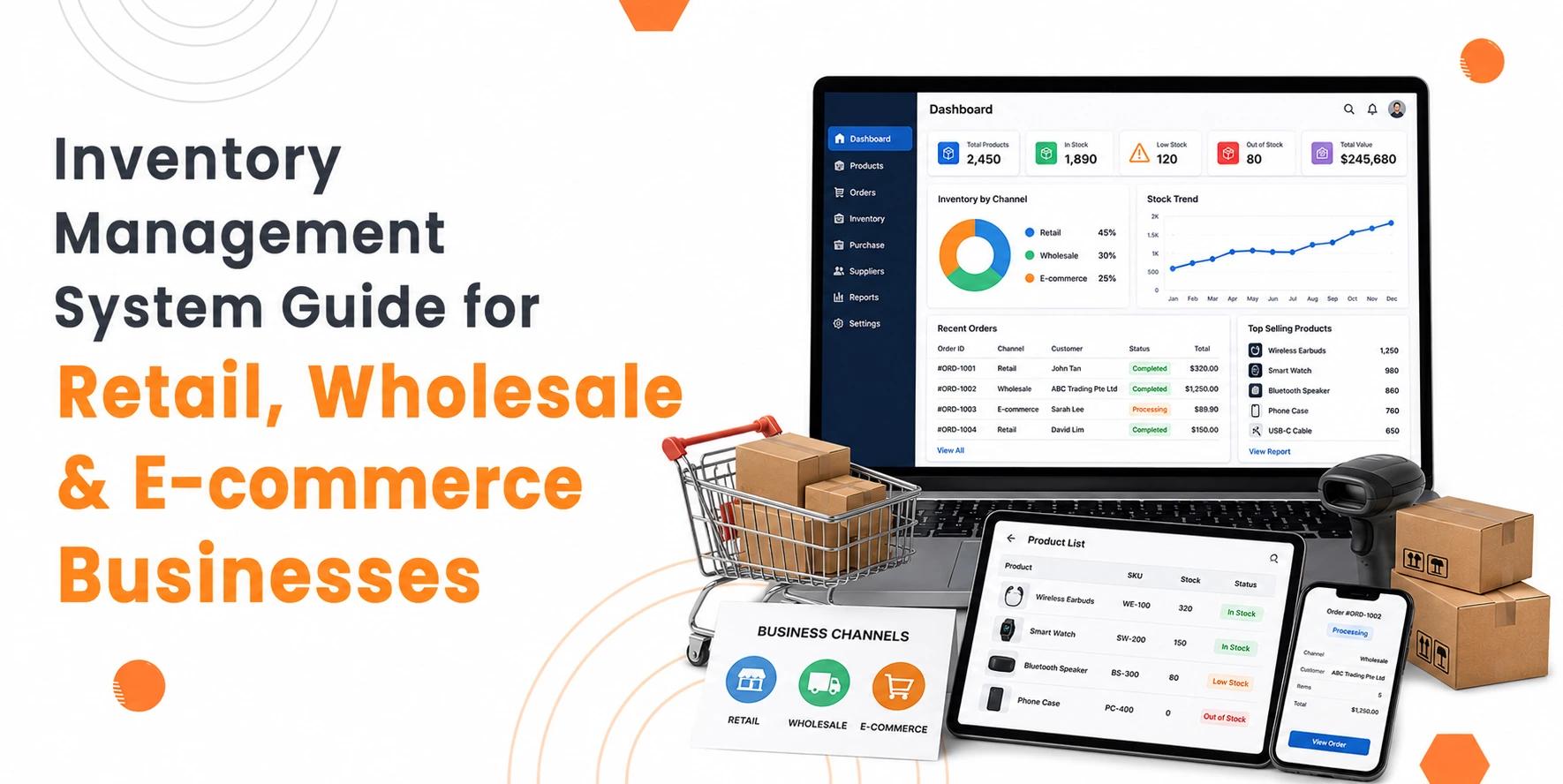
Operating a business demands inventory management as its fundamental operational component. The way you run your business between retail stores, wholesale operations and online selling platforms determines how stock tracking systems affect your business results through sales numbers, customer contentment and profit margins.
Several businesses start their operations with spreadsheet management and basic tracking systems. But these tools or methods are difficult to manage as operations grow. This is where an inventory management system becomes valuable.
In this guide, you will explore how inventory systems help businesses in retail, wholesale and ecommerce operations, along with their advantages and so on.
Build Custom Software That Fits Your Business
From CRM to inventory systems — we design solutions around your workflow, not the other way around.
Why Businesses Need an Inventory Management System
Inventory challenges can affect businesses of all sizes. Even small inventory inaccuracies can lead to lost sales, excess stock, and dissatisfied customers.
Here are some key reasons businesses invest in inventory management software.
1. Improve Inventory Accuracy
The process of manual inventory tracking leads to frequent errors when workers handle stock management. The system records wrong product data, while it also loses items and produces incorrect item counts. Organisations can prevent human mistakes through inventory management systems, which actively monitor stock levels and handle all inventory record operations.
2. Prevent Stockouts
Running out of stock can damage customer trust and reduce revenue.
Businesses identify their stock levels more accurately through improved inventory tracking, which enables them to order new products when their current supply becomes insufficient.
3. Reduce Excess Inventory
Businesses need to keep their stock levels at a level that prevents them from spending too much money on storage costs and capital expenses.
Organisations that track their stock accurately will keep their inventory amounts at suitable levels while avoiding excessive stock accumulation.
4. Increase Operational Efficiency
Staff members can find inventory details quickly because all stock information exists in a centralised system.
The system brings better productivity results to purchasing, warehousing, sales and fulfilment operations.
5. Support Business Growth
Businesses face increasing inventory management difficulties when they establish new business operations in different markets, sales platforms and physical locations.
Businesses can handle their expanding operations through a scalable inventory management software solution that maintains their existing stock control system.
Inventory Management System for Retail Businesses
Retail businesses deal with constant inventory movement. Products arrive, sell, transfer between stores, and return from customers.
Without accurate inventory control, retailers can struggle to meet customer demand.
Common Retail Inventory Challenges
Retail businesses often face:
- Seasonal demand fluctuations
- Fast-moving inventory
- Multiple store locations
- Omnichannel sales
- Product returns
Managing these challenges requires accurate inventory visibility.
How an Inventory System for Retail Supports Operations
An inventory system for retail helps businesses maintain stock accuracy across stores and sales channels.
Retailers can:
- Monitor stock availability
- Track product movement
- Manage store transfers
- Support click-and-collect services
- Reduce inventory discrepancies
This helps ensure customers can find products when they visit a store or place an order online.
Key Benefits for Retailers
Better Stock Visibility
Store managers can view inventory levels across all locations.
Faster Replenishment
Low-stock alerts help teams reorder products before inventory runs out.
Improved Customer Experience
Accurate stock information reduces disappointment caused by unavailable products.
Easier Multi-Store Management
Retailers can transfer inventory between locations based on demand patterns.
An inventory system for retail provides the visibility needed to support daily operations and long-term growth.
Inventory Management System for Wholesale Businesses
Wholesale businesses often manage large inventory volumes and complex supply chains.
Unlike retailers, wholesalers handle bulk orders, multiple suppliers, and large warehouse operations.
Inventory Challenges for Wholesalers
Common challenges include:
- Managing high stock volumes
- Coordinating supplier deliveries
- Tracking inventory across warehouses
- Processing large customer orders
- Managing stock allocation
Without proper inventory controls, these processes can become difficult to manage.
How an Inventory System for Wholesale Improves Efficiency
An inventory system for wholesale helps businesses organise inventory across multiple locations while improving order accuracy.
It supports:
- Inventory allocation
- Supplier management
- Purchase order tracking
- Warehouse visibility
- Stock movement monitoring
This creates better control over inventory operations.
Key Benefits for Wholesale Businesses
Improved Warehouse Management
Businesses maintain control over their inventory by tracking products that exist in their storage facilities and warehouse operations.
Better Purchasing Decisions
The process of purchasing and replenishment planning becomes possible through accurate inventory data, which needs to be available.
Faster Order Processing
The staff members achieve better product location and order fulfillment results through their improved operational performance.
Reduced Inventory Costs
Businesses avoid overstocking and minimise carrying costs.
Wholesalers who operate a massive inventory system need to monitor their stock levels through an inventory management system.
Ecommerce Inventory Management Systems in Singapore
Ecommerce businesses face unique inventory challenges. Customers expect fast delivery, accurate stock information, and seamless shopping experiences.
Managing inventory across multiple online channels requires a centralised approach.
Common Ecommerce Inventory Challenges
Many ecommerce businesses struggle with:
- Overselling products
- Managing inventory across marketplaces
- Processing returns
- Handling rapid order volumes
- Maintaining stock accuracy
These challenges increase as businesses expand into additional sales channels.
How Ecommerce Inventory Management Works
An ecommerce inventory management system in Singapore provides a central source of inventory data.
When a product sells through one channel, stock levels update across all connected channels.
This reduces the risk of overselling and improves inventory accuracy.
Benefits for Ecommerce Businesses
Real-Time Inventory Updates
Stock levels remain accurate across all sales channels.
Better Order Management
The system enables fast order processing because it provides exact stock information, which helps to complete orders efficiently.
Improved Customer Satisfaction
The system provides customers with precise details about which products remain available in stock.
Multi-Channel Inventory Control
Businesses can manage their inventory from a single platform that connects their websites, marketplaces and physical stores.
An ecommerce inventory management system in Singapore helps businesses maintain inventory accuracy while supporting growth across multiple sales channels.
How to Integrate Inventory Management Systems with Other Business Software
Inventory management does not operate in isolation. Most businesses rely on multiple systems to manage daily operations.
Integration helps information flow between departments and reduces manual data entry.
Point-of-Sale Systems
Retail businesses often connect inventory systems with POS systems. When a sale occurs, inventory records update automatically.
This improves stock accuracy and reduces administrative work.
Ecommerce Platforms
Online stores generate inventory transactions throughout the day. Integrating ecommerce platforms with an inventory management system ensures stock information remains current across all channels.
Accounting Systems
Inventory data plays an important role in financial reporting. Integration with accounting systems helps maintain accurate inventory valuations and financial records.
Warehouse and Logistics Systems
Warehouse operations benefit from inventory visibility and stock tracking. Integration supports receiving, picking, packing, and shipping activities. Businesses that connect inventory systems with other software create more efficient workflows and reduce manual processes.
Inventory Reporting Dashboards That Drive Better Decisions
Good inventory management relies on accurate information.
Reporting dashboards provide insights into inventory performance and help businesses make informed decisions.
1. Inventory Turnover
This metric measures how quickly inventory sells during a specific period. Low turnover may indicate slow-moving stock. High turnover may suggest strong demand.
2. Stockout Rate
This shows how often products become unavailable. Frequent stockouts can result in lost sales and dissatisfied customers.
3. Inventory Value
Businesses can track the total value of inventory held in stock. This helps with financial planning and inventory control.
4. Slow-Moving Inventory
Reports can identify products that remain in storage for extended periods. Businesses can then take action to reduce excess inventory.
5. Order Fulfilment Performance
Dashboards help monitor how efficiently orders are processed and delivered. By using inventory tracking software and reporting tools, businesses gain better visibility into stock performance and operational trends.
Cloud Inventory Management System vs Traditional Inventory Software
Businesses often choose between cloud-based and traditional inventory solutions. Each option offers different advantages.
Cloud Inventory Management System
A cloud inventory management system stores data online and provides access through an internet connection.
Advantages
- Access from multiple locations
- Easier system updates
- Improved scalability
- Reduced hardware requirements
Many growing businesses prefer cloud-based solutions because they support expansion and remote access.
Traditional Inventory Software
Traditional inventory software is usually installed on local servers or computers.
Advantages
- Greater control over infrastructure
- Internal data management
- Custom deployment options
However, traditional systems may require higher maintenance and infrastructure investment.
Which Option Is Better?
The right choice depends on business requirements, operational complexity, and future growth plans. For businesses seeking flexibility and scalability, a cloud inventory management system often provides significant advantages.
Signs Your Business Has Outgrown Its Current Inventory System
Many businesses continue using outdated inventory processes for longer than necessary. Recognising the warning signs can help prevent operational issues.
1. Inventory Is Managed Through Spreadsheets
Manual tracking becomes difficult as inventory volumes increase.
2. Stock Discrepancies Are Increasing
Frequent inventory errors indicate poor visibility and control.
3. Order Fulfilment Delays Are Common
Slow fulfilment often points to inefficient inventory processes.
4. Multiple Locations Are Difficult to Manage
Businesses need centralised inventory data when operating across stores or warehouses.
5. Reporting Takes Too Long
Generating reports manually can delay decision-making.
6. Business Growth Is Creating Complexity
The launch of new sales channels, together with additional warehouses and product lines, needs to establish enhanced inventory monitoring systems.
The business should update its inventory software system together with its inventory management practices because these problems keep happening on a regular basis.
Conclusion
An inventory management system helps businesses maintain control over stock, improve operational efficiency, and support growth. Businesses operating retail stores and wholesale operations, and online shops, need accurate inventory data because it serves as their primary business success factor.
Retailers benefit from better stock visibility and store management. Wholesalers gain stronger warehouse control and purchasing oversight. Ecommerce businesses maintain correct inventory data through their different sales platforms, which operate separately. Businesses need inventory software for their expanding operations because it requires software that supports system integrations, provides reporting functions, inventory tracking capabilities and scalable workflow management.
Businesses can achieve better inventory management through their selection of inventory systems, which leads to improved customer satisfaction and establishes a strong base for upcoming expansion.