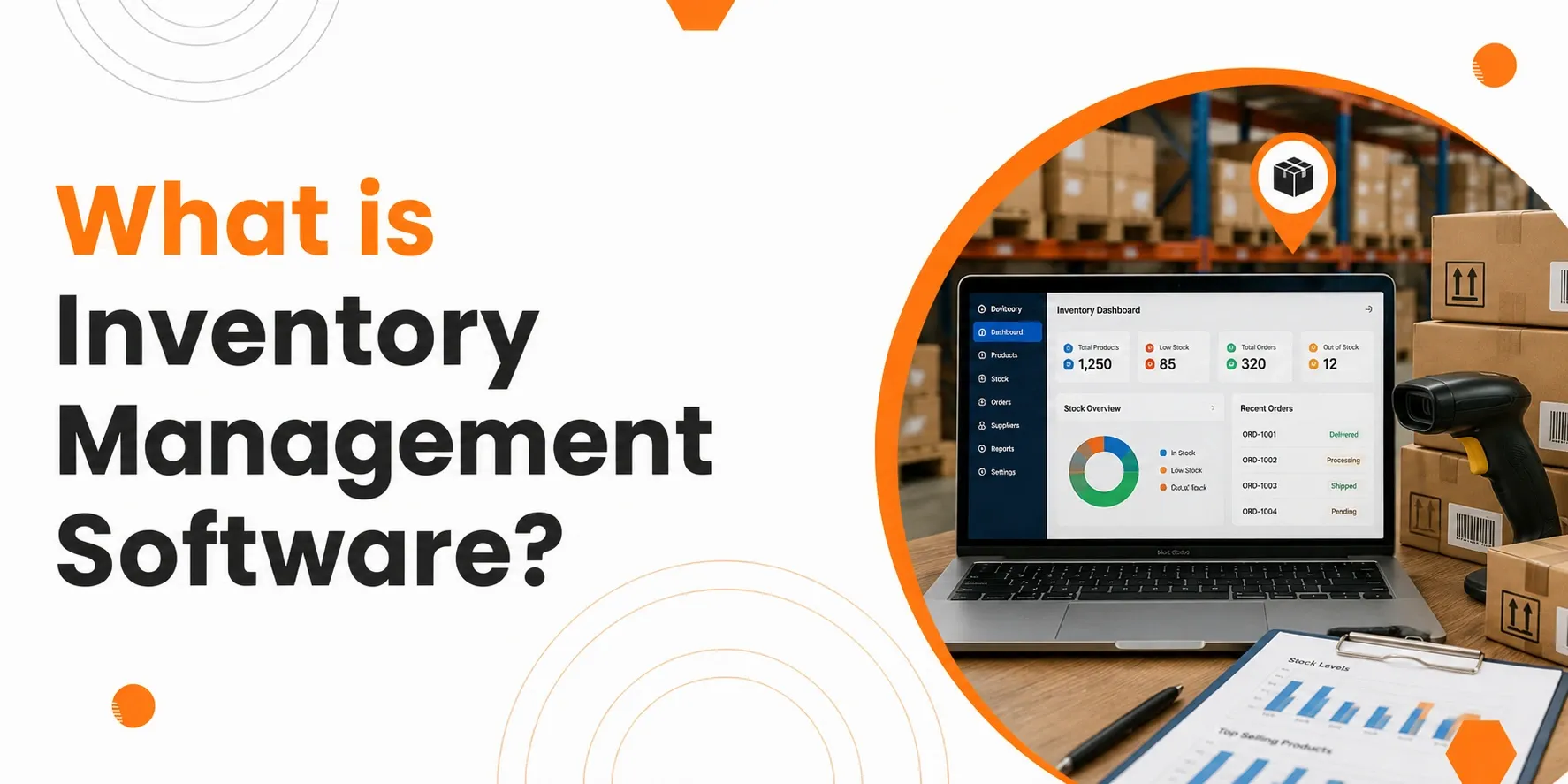
Inventory management software is a digital system that helps businesses track, manage, and control stock throughout its lifecycle. It records inventory movements, maintains accurate stock levels, reduces manual errors, and supports better inventory planning and decision-making.
In this guide, you will learn what is inventory management software, how it works, its main features, benefits, and how to choose the right solution for your business.
Build Custom Software That Fits Your Business
From CRM to inventory systems — we design solutions around your workflow, not the other way around.
How Does Inventory Management Software Work?
It records every inventory transaction, updates stock levels automatically, and provides a real-time view of available inventory. The process is straightforward.
Goods Enter the Business
When new stock arrives, the system records the quantity, product details, supplier information, and storage location.
Inventory is Stored
Products are assigned to storage areas, making them easier to locate when needed.
Stock Levels Update
Every sale, return, transfer, or adjustment changes the inventory count automatically. This keeps stock records accurate without repeated manual updates.
Orders are Processed
When customers place orders, inventory levels reduce to reflect the products sold.
Reports are Generated
The software creates reports that show stock levels, fast-selling products, slow-moving inventory, and reorder requirements.
This explains how inventory management software works practically. It connects everyday inventory activities into one organised system.
What are the Key Features of Inventory Management Software
Inventory management software features that help businesses monitor stock, manage orders, track inventory movements, and generate useful reports.
Real-Time Stock Tracking
The system updates inventory levels whenever products move in or out of stock.
Inventory Reports
Reports provide information about current stock, inventory value, sales trends, and product performance.
Purchase Order Management
Businesses can create, manage, and monitor purchase orders from suppliers.
Sales Order Tracking
The software records customer orders and updates stock after each sale.
Barcode Support
Barcode scanning helps speed up stock handling while reducing manual errors.
Stock Alerts
The system can notify users when inventory reaches a minimum level, helping businesses reorder before products run out.
Multi-Location Inventory
Businesses with several warehouses or stores can monitor inventory across different locations from one system.
What are the Benefits of Inventory Management Software
An inventory management system improves stock accuracy, saves time, reduces manual work, and helps businesses make better inventory decisions.
Better Stock Accuracy
The system automatically updates data, which stops human errors that occur during manual record entry.
Faster Daily Operations
The process of stock counting and spreadsheet updating requires employees to dedicate less time at their workplace.
Improved Customer Service
Customers receive their orders because companies obtain accurate product inventory numbers before processing their requests.
Lower Inventory Costs
The stock control system operates with precision to stop businesses from making unnecessary purchases that lead to inventory stock that exceeds what they need.
Better Business Decisions
The detailed reports help users understand customer buying trends, which enables them to develop better inventory management strategies.
Easier Growth
Organisations need to switch from their present manual inventory tracking system to a computerised solution when they achieve business growth. The software system offers an organised method that enables users to manage their increasing stock inventory.
Who Uses Inventory Management Software?
Inventory management software is used by businesses that buy, store, sell, or distribute physical products.
Many industries rely on inventory management, including:
- Retail businesses
- Wholesale suppliers
- Manufacturers
- Warehouses
- Distributors
- E-commerce businesses
- Healthcare providers
- Food and beverage businesses
Any organisation that manages physical stock can benefit from organised inventory control.
How to Choose Inventory Management Software
Choose inventory management software that matches your business size, inventory requirements, and future growth plans. Consider the cost, features, and ROI for SMEs before making a decision.
Ease of Use
The software needs to have a user-friendly design that enables every team member to operate it effectively.
Business Requirements
Select a system which supports your inventory operations while maintaining straightforward operational procedures.
Reporting Capabilities
Find reports that show inventory performance through simple, clear information.
Scalability
Your inventory needs may increase over time. Select software that can support business growth.
Customer Support
Reliable support helps resolve issues quickly and keeps operations running smoothly.
What are the Common Challenges Without Inventory Management Software
Businesses without inventory management software often face inaccurate stock records, manual errors, delayed updates, and poor inventory visibility. Some common problems include:
- Incorrect stock counts
- Duplicate data entry
- Missed reorder points
- Slow stock checks
- Difficult inventory audits
- Limited visibility across storage locations
These issues often become more noticeable as inventory volumes grow.
Conclusion
Overall, after reading this blog, your queries about What is Inventory management software is are cleared, which enables businesses to organise their stock while keeping precise inventory data, which enhances their operational efficiency.
IMS functions as a digital system, which explains why many companies depend on this technology to track their stock levels. The software program demonstrates its inventory management system through automated stock updates, which maintain precise inventory numbers to help businesses create better operational plans.
The definition of inventory management software shows its purpose to handle stock operations that go beyond fundamental inventory monitoring activities. The system provides businesses with a complete solution that enables them to monitor their inventory while reducing errors, enhancing customer support, and building long-term business development.