Every successful delivery starts with a well-planned route. Customers expect their orders to arrive on time, and businesses need to keep delivery costs under control. The failure to deliver packages on time, together with wrong delivery schedules, creates customer dissatisfaction while it drives up fuel expenses and leads to wasted time for drivers.
That’s why businesses need a delivery management system, because this system provides essential solutions that help businesses achieve better operational efficiency through their delivery route planning system, which they use to set precise delivery timelines that help them develop trust with their customers.
This guide explains route optimisation systems while showing delivery failure reasons and business strategies for improving delivery time predictions and customer delivery experiences.
Build Custom Software That Fits Your Business
From CRM to inventory systems — we design solutions around your workflow, not the other way around.
What Is Delivery Route Optimisation?
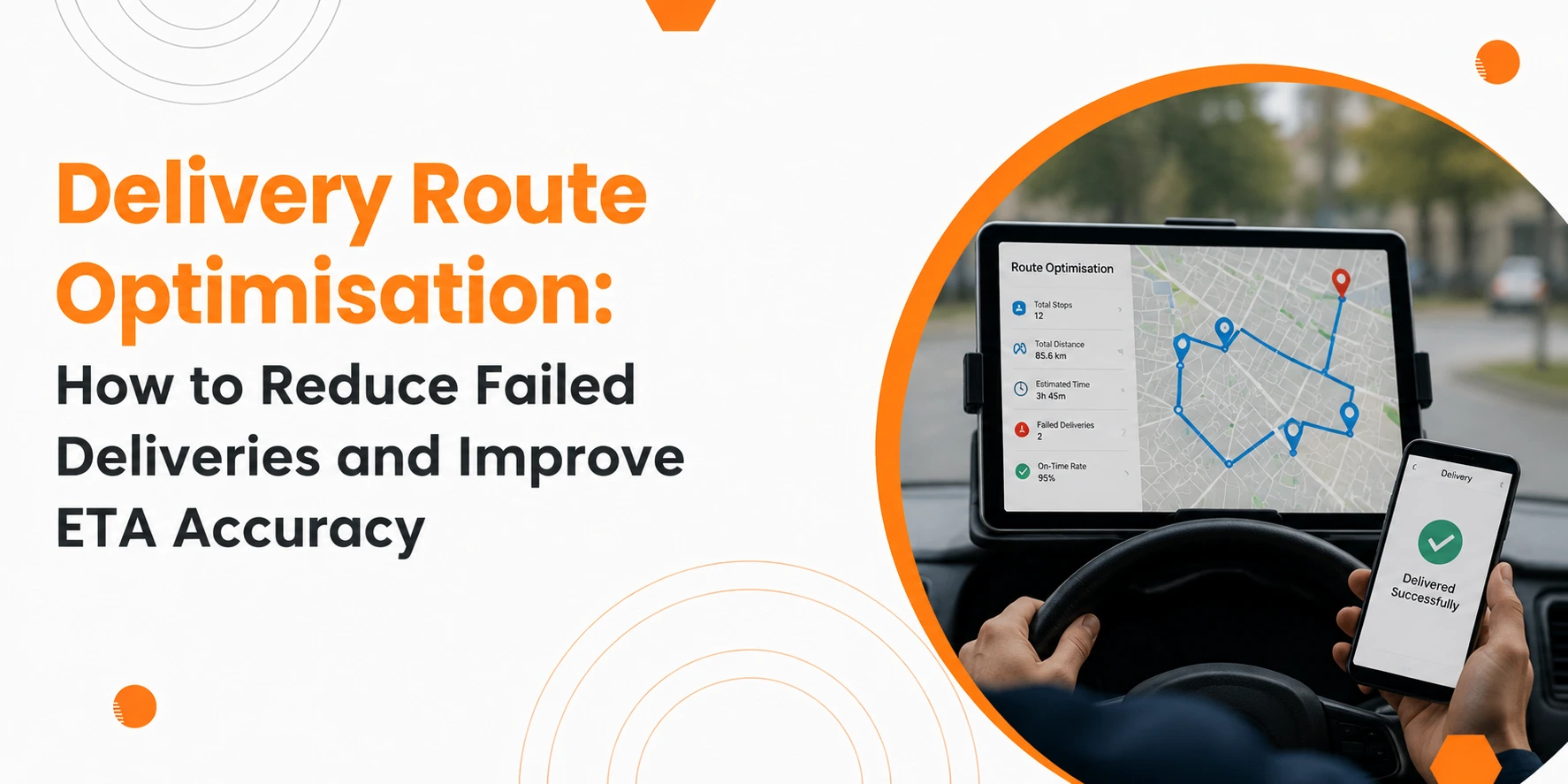
Delivery route optimisation is the process of finding the most efficient route for each delivery. It helps businesses reduce travel time, lower fuel costs, improve ETA accuracy, and complete more deliveries in less time.
Many people think route planning means choosing the shortest path between two locations. In reality, delivery planning involves much more.
A good route considers:
- Traffic conditions
- Delivery priority
- Driver schedules
- Road restrictions
- Customer time slots
- Vehicle capacity
When businesses rely on manual planning, routes often become longer than necessary. Drivers may spend more time on the road, leading to delays and missed delivery windows.
Using delivery management software allows businesses to organise deliveries more smartly. The system creates efficient routes that help drivers complete more stops while reducing unnecessary travel.
Businesses that want to understand the wider role of these tools can refer to a Delivery management software guide for more information about planning, dispatching, tracking and reporting features.
Why Do Failed Deliveries Happen?
The main causes of unsuccessful deliveries stem from inadequate scheduling and wrong location details, absent customers, road blockages, and missing delivery status information.
A single delivery failure creates expenses that surpass the cost of missing one delivery stop. The process needs a fresh delivery attempt, which demands extra fuel consumption, driver hours, and additional customer service support. Some of the most common reasons include:
Incorrect delivery addresses
Wrong or incomplete addresses make it difficult for drivers to locate customers.
Customer not available
Customers may not know when the delivery will arrive. Without updates, they might not be present to receive the order.
Poor route planning
Drivers can become delayed when routes are planned without considering traffic or delivery priority.
Vehicle capacity issues
Overloaded vehicles slow down deliveries and increase the chance of delays.
Lack of delivery visibility
Without a proper delivery tracking system, dispatch teams cannot monitor progress or respond quickly when problems arise. Reducing failed deliveries starts with better planning before the driver leaves the warehouse.
How Does Delivery Route Optimisation Reduce Failed Deliveries?
Delivery route optimisation reduces failed deliveries by creating efficient routes, improving driver schedules, and helping businesses respond quickly to delays. Smart route planning improves every stage of the delivery process.
Better delivery sequencing
Drivers follow a logical customer visit sequence which prevents them from making unnecessary backtracking through identical routes.
The process cuts down on travel time, which enables drivers to maintain their scheduled arrival times.
Accurate delivery windows
The system provides customers with exact delivery schedules which reflect actual delivery paths instead of using general time ranges.
Faster response to delays
Every path stands vulnerable to unexpected traffic blocks and road closure situations. The day-to-day delivery plan updates allow dispatch teams to respond quickly while they keep their deliveries operational.
Improved customer communication
Customers appreciate knowing when their order will arrive. Regular delivery updates reduce missed deliveries caused by customer absence.
Why Is ETA Accuracy Important?
Accurate ETAs help customers prepare for deliveries, reduce missed orders, and improve trust in the delivery service. Estimated Time of Arrival (ETA) has become one of the most important parts of the delivery experience.
Customers no longer want broad delivery windows such as “between 9 am and 5 pm.” They expect more precise arrival times.
Accurate ETAs provide several benefits.
Better customer satisfaction
Customers can plan their day without waiting for long periods.
Fewer customer enquiries
When customers know exactly where their order is, they are less likely to contact support.
Higher delivery success
Customers are more likely to be available when they receive reliable arrival estimates.
Better driver productivity
Drivers spend less time waiting or making repeat visits.
Many businesses now rely on real-time ETA delivery software to keep customers informed throughout the delivery journey.
How Does a Delivery Management System Improve Route Optimisation?
A delivery management system enables organisations to create delivery routes while tracking their drivers and observing their delivery operations to enhance their delivery service quality from start to finish.
A modern delivery management system connects dispatch teams, drivers, and customers on one platform. Instead of using spreadsheets or manual planning, businesses can manage deliveries from one place. Key capabilities include:
Route planning
Routes are organised to reduce travel distance and improve delivery efficiency.
Driver management
Dispatch teams can assign deliveries based on driver location, vehicle type, or workload.
Live delivery visibility
A delivery tracking system allows teams to monitor delivery progress throughout the day.
Delivery confirmation
Drivers can record successful deliveries through digital confirmation methods, helping reduce disputes.
These features help businesses improve daily operations while providing a better customer experience.
A related resource on How DMS Improves Customer Experience can explain how delivery notifications, accurate ETAs, tracking links, and proof of delivery contribute to stronger customer relationships.
What Role Does Real-Time Tracking Play?
Real-time tracking allows businesses and customers to monitor deliveries, respond to delays, and improve delivery transparency.
Visibility is essential during every delivery. Without live tracking, dispatch teams often discover problems only after customers report them.
A delivery tracking system offers several advantages.
Live driver location
Operations teams can monitor delivery progress throughout the day.
Delay notifications
Customers receive updates when delivery times change.
Faster problem solving
If a vehicle breaks down or traffic causes delays, dispatch teams can respond quickly.
Improved customer confidence
Customers feel more informed when they can follow their delivery journey.
This level of visibility helps reduce missed deliveries while improving communication.
How Can Businesses Improve Route Optimisation in Singapore?
Businesses operating in Singapore can enhance their route optimisation through precise route mapping, active traffic monitoring, and better delivery tracking systems.
The process of delivering goods to urban areas requires special solutions because these areas create their own set of operational difficulties.
The delivery process becomes longer because vehicles face traffic jams and parking shortages while commercial areas stay active throughout the day.
Group nearby deliveries
Delivering to customers in the same area reduces unnecessary travel.
Plan around peak traffic
Scheduling deliveries outside busy periods helps drivers stay on time.
Use accurate customer information
Verified addresses reduce navigation errors.
Monitor delivery progress
Live updates help dispatch teams respond before delays become larger problems.
These practices help businesses improve route optimisation in Singapore while maintaining reliable service.
What Are the Benefits of Delivery Management Software?
Delivery management software helps businesses reduce costs, improve delivery efficiency, increase visibility, and provide better customer service.
As delivery volumes increase, manual planning becomes difficult. Using delivery management software provides several operational benefits.
Lower fuel costs
Efficient routes reduce unnecessary driving.
Better driver productivity
Drivers complete more deliveries within the same working hours.
Higher delivery success rates
Accurate scheduling helps reduce failed deliveries.
Improved customer communication
Customers receive timely updates throughout the delivery process.
Better reporting
Managers can review delivery performance and identify areas for improvement. These improvements help businesses deliver a consistent customer experience.
How Can Businesses Continue Improving Delivery Performance?
Businesses should measure delivery performance, review delivery data, and refine delivery routes regularly. Continuous improvement helps businesses maintain high delivery standards.
Useful performance indicators include:
- First-attempt delivery success
- Average delivery time
- ETA accuracy
- Fuel consumption
- Number of delayed deliveries
- Customer feedback
Reviewing these results helps businesses identify trends and improve future delivery planning. Small improvements made over time often produce significant long-term gains.
Conclusion
Overall, Delivery route optimisation allows businesses to decrease their delivery failures while achieving precise estimated arrival times, reducing their operational expenses and enhancing their customer service experience.
The rising demands of customers require businesses to operate their delivery systems at maximum efficiency for their current operations. Businesses achieve better delivery results through their planning methods when they provide precise arrival time estimates and maintain direct customer communication, which leads to higher customer satisfaction levels.
Businesses need modern delivery management systems that combine dependable delivery management software with strong delivery tracking systems to obtain full oversight of their delivery operations. Businesses achieve better operational efficiency through route planning and customer update systems, which reduce delays while building stronger customer relationships.
Check Out this: What is a Delivery-Management System