Running a business in Singapore today means dealing with speed, cost pressure, and rising customer expectations. A Business Automation Solution in Singapore helps streamline operations by reducing manual work, improving accuracy, and creating faster workflows across departments. Many firms still rely on manual tasks that repeat every day, which slows teams down and leads to errors.
This is where a business automation solution comes in. It helps firms handle routine work with better speed and accuracy. It also frees people to focus on tasks that need judgment and planning.
In this blog, you will explore how automation supports businesses in Singapore, where it works best, and how you can apply it in a practical way.
Build Custom Software That Fits Your Business
From CRM to inventory systems — we design solutions around your workflow, not the other way around.
What Is Business Automation?
Business automation is the use of technology to handle tasks with little or no human input. These tasks often follow clear rules and are repeated often.
Examples include:
- Sending invoices
- Updating records
- Managing stock levels
- Responding to basic customer queries
With the right setup, these tasks run in the background while your team focuses on work that adds more value.
A strong Business Automation Solution does not replace people. It supports them by removing routine work.
Why Businesses in Singapore Are Turning to Automation
Singapore Businesses use automation to Improve Operational Efficiency while they Reduce Operation Costs and Handle Growing Workloads through their Existing Workforce. Singapore operates its business sector at a rapid pace. Businesses need to stay efficient to remain competitive.
Businesses have started using automation because of these essential factors:
1. Rising Labour Costs
Companies need to invest large amounts of money in their staff recruitment process and employee retention programs. Due to this, organisations choose automation because they want to replace human labor when performing repetitive work tasks.
2. Demand for Speed
Businesses need to respond to their customers right away according to customer needs. Businesses can handle their customer requirements through automation, which provides immediate service without making customers wait.
3. Need for Accuracy
The process of manual work creates errors that occur during work activities. To address this, automated systems follow rules that help to limit the number of errors that happen.
4. Growth Without Extra Headcount
Organisations have the ability to expand their operational activities through existing staff members without needing to increase their employee count.
Overall, multiple businesses in Singapore have started using automation services because they want to enhance their standard operational activities.
What are the Key Areas Where Automation Makes a Difference?
Automation makes a difference in areas that involve repetitive tasks, high data handling, and time-sensitive processes.
Automation can support many parts of a business. Below are some of the most common areas.
Finance and Accounting
Routine finance tasks take time and require precision. Automation can help with:
- Invoice creation and tracking
- Payment reminders
- Expense recording
- Report generation
This reduces errors and saves time during audits.
Customer Service
Handling customer queries can be time-consuming. Automation can:
- Respond to common questions
- Route complex issues to staff
- Track customer requests
This improves response time and keeps customers satisfied.
Human Resources
HR teams handle many repetitive tasks. Automation helps with:
- Leave requests
- Payroll processing
- Staff onboarding
This ensures smooth operations and better record-keeping.
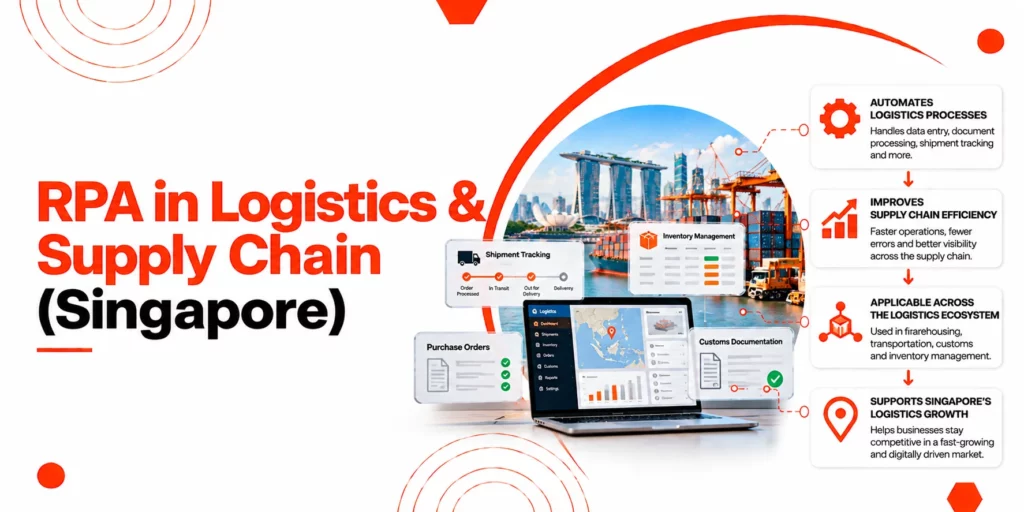
Supply Chain and Inventory
Managing stock manually can lead to delays or shortages. Automation can:
- Track stock levels
- Trigger reorders
- Update inventory records
This keeps operations steady and avoids disruptions.
What Makes a Strong Business Automation Solution in Singapore?
A strong AI business process automation integrates workflow, uses accurate data, and supports business growth through clear, structured workflows.
Not all automation efforts deliver results. Some improve speed but create confusion. Others reduce effort but fail to scale. A strong solution must support operations from end to end.
Below are the key elements that define a reliable and effective solution.
Clear Process Structure
Automation works best when processes are well defined. If a workflow is unclear, automation will only repeat the same confusion at a faster pace.
Start by mapping out each step:
- What triggers the process
- What actions take place
- What outcome is expected
This clarity ensures that the system follows a logical path and delivers consistent results.
Seamless Workflow Integration
A strong solution connects different parts of your business. It should not operate in isolation.
For example:
- Sales updates should reflect in the inventory
- Orders should link to billing
- Customer data should stay consistent across systems
This is where digital workflow automation in SG plays a key role. It ensures that tasks move smoothly from one stage to another without delay.
Reliable Data Handling
Automation depends on data. If the data is incomplete or incorrect, the results will suffer.
A good system:
- Captures data accurately
- Updates records in real time
- Maintains consistency across processes
This is essential for AI business process automation, where decisions rely on data patterns and trends.
Flexibility and Scalability
Businesses grow and change. Your automation system should adapt with you.
A strong solution allows you to:
- Add new workflows
- Adjust existing processes
- Handle increased workload
This ensures long-term value without the need for constant redesign.
User-Friendly Design
Automation should make work easier, not harder. If a system is complex, teams may avoid using it.
A practical solution:
- It is easy to understand
- Requires minimal training
- Fits into daily operations
This improves adoption and ensures that your team benefits from the system.
Ongoing Monitoring and Improvement
Automation is not a one-time setup. Processes need regular review to stay effective.
Track:
- Processing time
- Error rates
- Output quality
Make adjustments when needed. This keeps your Business Automation Solution in Singapore aligned with your goals.
Strong Support and Maintenance
Even the best systems need support. Issues can arise, and updates may be required.
This is why many firms rely on automation services in Singapore for:
- System maintenance
- Process improvement
- Technical support
Reliable support ensures smooth operation and reduces downtime.
How to Choose the Right Automation Approach
The right automation approach starts with clear goals, simple processes, and gradual implementation.
Not all automation efforts succeed. The key is to start with the right plan.
Identify Repetitive Tasks
Look for tasks that:
- Follow clear rules
- Occur often
- Take up staff time
These are the best candidates for automation.
Set Clear Goals
Decide what you want to achieve:
- Save time
- Reduce errors
- Improve customer service
Clear goals help guide your decisions.
Start Small
Begin with one process. Test it and improve it before expanding.
Train Your Team
Your team needs to understand how the system works. This ensures smooth adoption.
Monitor and Improve
Automation is not a one-time setup. Review performance and make changes when needed.
Also Read: AI Business Process Automation: How Singapore Companies Improve Efficiency with AI
What Challenges Do Businesses Face with Automation?
Businesses face challenges such as resistance to change, poor data quality, high initial costs, and system integration issues.
While automation offers many benefits, there are challenges to consider.
Resistance to Change
Some staff may feel unsure about new systems.
Solution:
Provide training and explain how automation supports their work.
Data Quality Issues
Automation relies on accurate data.
Solution:
Clean and organise your data before applying automation.
Initial Costs
Setting up automation requires investment.
Solution:
Focus on areas with clear returns to justify the cost.
Integration with Existing Systems
New systems must work with current tools.
Solution:
Plan integration carefully and test before full rollout.
What Is Driving the Demand for Automation Services in Singapore?
The demand for automation services in Singapore is rising due to the need for faster operations, cost control, and better workflow management.
Why Demand Is Rising
Businesses in Singapore should work on their operational speed while they need to lower their financial costs. Due to this, the work processes slow down, and manual operations create performance breakdowns in their activities.
Organisations have started using automation because it allows them to achieve better work management systems. The increasing number of tasks creates obstacles for teams to maintain their performance through established approaches.
With it, Automation helps solve this by creating reliable systems that run smoothly and reduce delays.
What These Services Provide
Business operations receive complete support from automation providers, which handle all operational requirements. The system helps users identify automation candidates while creating organised work processes that adapt to their current operational setup.
The system tracks performance metrics while it runs continuous process optimisation programs, which deliver regular improvements.
The Business Impact
As a result, businesses can avoid common mistakes such as poor planning or weak system setup. This leads to better efficiency and fewer delays.
Ultimately, organisations can focus more on growth while maintaining stable and consistent daily operations.
Conclusion
Overall, Business automation solutions in Singapore have evolved into an essential requirement for organisations to function effectively. The method delivers operational efficiency through cost reduction, which enables business expansion.
Singapore organisations can maintain their market position through strategic business automation implementation, which they should execute properly. Business process automation through AI technology enables organisations to automate their regular tasks, which lets them dedicate their resources to essential business activities.
The automation service expansion, along with the growth in digital workflow automation interest in SG, has created multiple options for businesses to choose from.