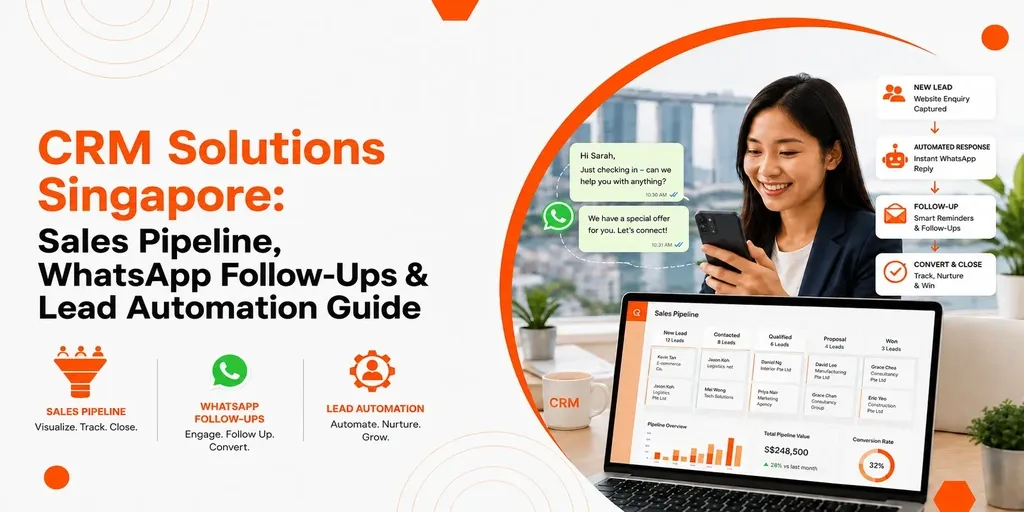
Managing leads can become difficult as a business grows. New enquiries arrive from websites, calls, messages, social channels, and referrals. Without one place to manage them, sales teams can lose track of conversations and miss follow-ups. This is where CRM solutions in Singapore businesses use can help.
A CRM brings customer details, sales activity, and follow-up tasks into one system. It helps your team see who contacted your business, what they need, and what should happen next. For Singapore SMEs, this can solve a common problem: leads are coming in, but the sales process is hard to manage.
This guide explains how CRM supports sales pipelines, WhatsApp follow-ups, and lead automation. It will also help you understand what to look for when choosing a CRM system in Singapore businesses can use for growth.
Build Custom Software That Fits Your Business
From CRM to inventory systems — we design solutions around your workflow, not the other way around.
What Are CRM Solutions in Singapore?
CRM solutions Singapore businesses use are systems that organise customer data, leads, conversations, sales opportunities and follow-up tasks in one place.
CRM stands for customer relationship management. The main goal is simple: help businesses manage relationships with prospects and customers.
Instead of keeping information across spreadsheets, inboxes, and personal notes, a customer relationship management system creates one shared record.
Your sales team can see:
- Contact information
- Lead source
- Past conversations
- Current sales stage
- Follow-up tasks
- Sales value
- Notes from team members
- Customer history
This gives everyone a clearer picture of each lead.
Read Out: What is Customer Relationship Management (CRM)?
What problems does a CRM solve?
Imagine a prospect sends a message asking for a quotation.
One salesperson replies. A few days pass. Nobody follows up because the conversation is buried under other messages. The prospect then chooses another company.
A CRM helps prevent this type of problem. It records the lead, assigns responsibility, and creates a clear next step. Good CRM software in Singapore businesses should make sales work easier to follow, not add another layer of admin.
How Does a CRM Help Build a Sales Pipeline?
A CRM creates a clear sales pipeline by showing where each prospect is in the buying process and what your team needs to do next. A sales pipeline turns individual leads into visible stages.
For example, your pipeline might look like this:
New Lead → Contacted → Qualified → Proposal Sent → Negotiation → Won or Lost
Each lead moves through these stages as the sales conversation develops.
What can your sales team see in the pipeline?
A good pipeline can show:
- Number of active leads
- Current stage of each lead
- Expected deal value
- Person responsible for the lead
- Last contact date
- Next follow-up date
- Deals that need attention
- Won and lost opportunities
This is why a sales pipeline CRM for SMEs can be useful. Business owners no longer need to ask each salesperson for an update on every opportunity.
The pipeline provides a shared view.
Why does pipeline visibility matter?
Sales problems are easier to fix when you can see them.
Suppose your business receives 100 enquiries each month. Many leads reach the quotation stage, but few become customers. The issue may not be lead generation. It may be your quotation, pricing, follow-up process, or response time.
A structured CRM system in Singapore that SMEs can use can help reveal these gaps.
How Does CRM Improve Lead Management?
CRM improves lead management by capturing enquiries, assigning leads, recording activity, and helping sales teams follow each opportunity from first contact to sale. A lead has little value if nobody manages it.
This is where businesses should understand how CRM Improves Lead Management across the full sales journey.
A CRM can give every new lead a clear owner and status. It can also record where the lead came from and when the next contact should happen.
What happens when a new lead enters the CRM?
A simple process may look like this:
- A customer sends an enquiry.
- The enquiry becomes a lead record.
- The lead is assigned to a salesperson.
- The salesperson receives a task.
- Contact history is stored.
- The lead moves through the sales pipeline.
- Follow-up tasks continue until the lead is won or lost.
This process reduces the chance of leads being forgotten.
A customer relationship management system also gives managers more context. They can see how many leads enter the business, how many receive a response, and how many become customers.
What Is CRM Lead Automation in Singapore?
CRM lead automation in Singapore businesses use helps handle routine sales tasks such as lead assignment, reminders, status updates, and follow-up actions.
Sales teams spend a lot of time on small tasks.
They update records. They create reminders. They assign enquiries. They check who needs a follow-up.
Some of this work can follow set rules.
Which lead tasks can be automated?
Common examples include:
- Creating lead records from enquiries
- Assigning leads to sales staff
- Sending follow-up reminders
- Moving leads between stages
- Flagging inactive leads
- Creating tasks after an enquiry
- Recording lead sources
- Sending standard follow-up messages
- Alerting managers about missed actions
CRM lead automation is used by SMEs to reduce repetitive work and create a more consistent sales process.
The goal is not to remove people from sales. Conversations, negotiation, and relationship building still need human judgement.
Automation handles routine steps, so your team can focus on customers.
How Can WhatsApp Work With a CRM?
WhatsApp CRM in Singapore helps businesses connect customer conversations with lead records, allowing sales teams to manage messages and follow-ups as part of the sales process.
Messaging is often part of the buying journey.
A prospect may ask about a product through a website and continue the conversation through WhatsApp. If those conversations are kept outside the sales record, important context can be lost.
A WhatsApp CRM in Singapore setup can bring messaging activity into the lead management process.
What does this mean for the sales team?
Instead of treating WhatsApp as a separate inbox, the conversation becomes part of the customer record.
Depending on the setup, teams may be able to track:
- Customer contact details
- Conversation history
- Lead stage
- Last contact
- Follow-up date
- Assigned salesperson
- Notes and tasks
This creates a clearer view of the relationship.
It can also help when a different salesperson needs to continue the conversation. They can understand what happened before contacting the prospect.
How Can CRM Improve WhatsApp Follow-Ups?
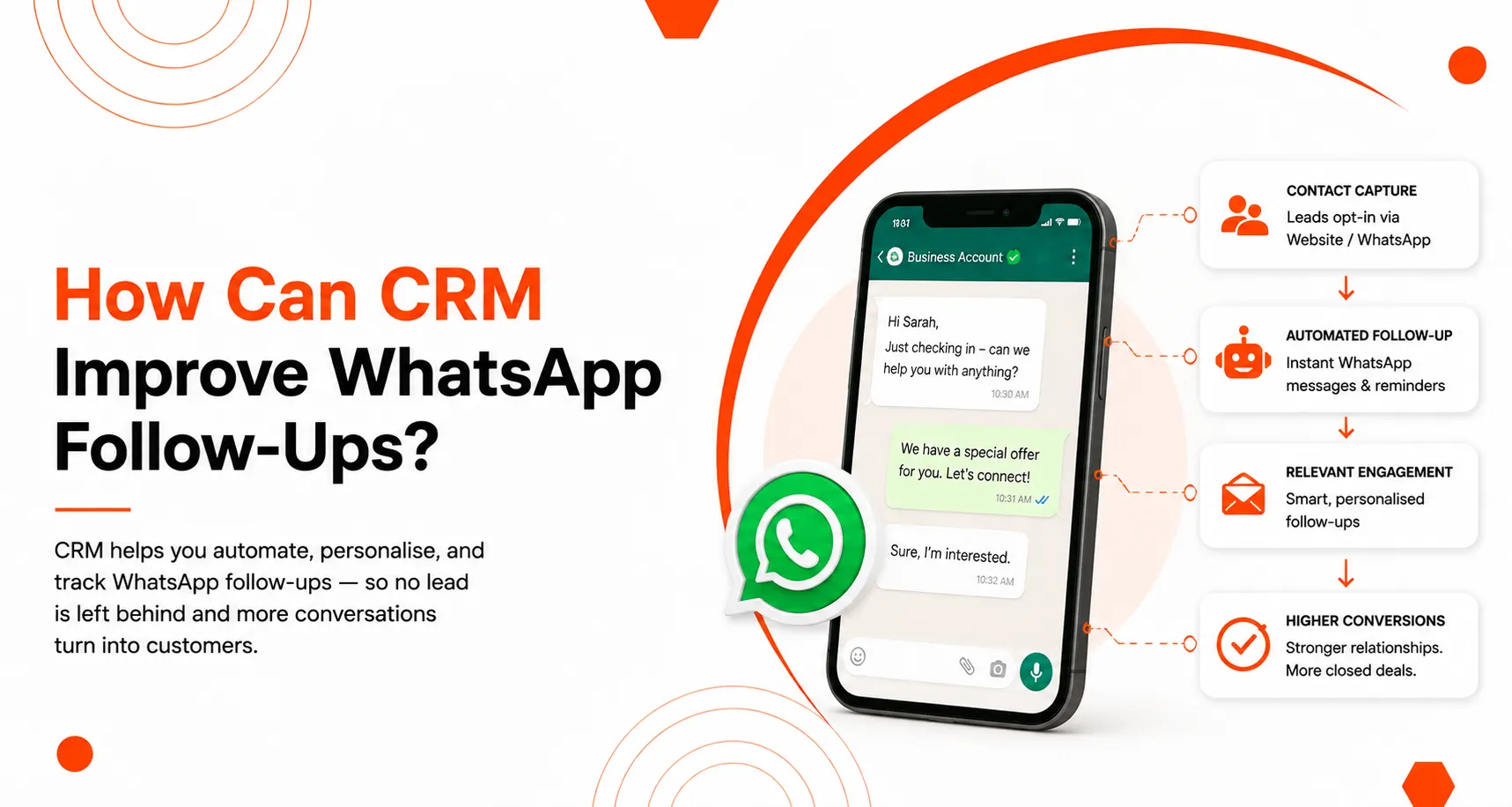
A CRM can improve WhatsApp follow-ups by creating reminders, tracking response history, and showing which leads still need attention.
Follow-up is one of the easiest parts of sales to neglect.
A prospect may be interested but not ready to buy during the first conversation. Without a follow-up system, that opportunity can disappear.
CRM helps teams build a process.
What could a follow-up process look like?
Suppose a prospect requests a quote.
The salesperson sends it and moves the lead to “Proposal Sent”. A follow-up task is then created.
If the prospect responds, the salesperson can update the opportunity.
If there is no response, another task can remind the salesperson to contact the prospect again.
This creates structure without forcing staff to remember every conversation.
A good CRM software setup in Singapore can make follow-ups a consistent part of the sales process rather than an optional task.
Why Is a Sales Pipeline CRM Useful for SMEs?
A sales pipeline CRM for SMEs gives smaller businesses a clear way to manage leads, sales activity, and expected revenue without relying on spreadsheets or memory.
SMEs often have small sales teams. One person may handle enquiries, proposals, follow-ups and customer service.
That makes organisation important.
A sales pipeline CRM for SMEs can help the business create a repeatable process even when the team is small.
What can an SME gain from a CRM?
One benefit is ownership. Every lead can have a person responsible for it. This reduces confusion about who should respond.
Another benefit is forecasting.
If your pipeline contains ten qualified opportunities, you can estimate potential sales based on their stage and value. You can also identify slow deals and contact those prospects before opportunities go cold.
This can make CRM useful for service companies, wholesalers, education providers, property businesses and other Singapore SMEs with active sales processes.
What Should You Look for in CRM Software in Singapore?
Look for CRM software that fits your sales process, is easy for your team to use, and provides the lead, pipeline, messaging, and reporting features your business needs.
More features do not always mean a better system.
If staff find the system difficult, they may stop updating it. Once the data becomes incomplete, the CRM loses much of its value.
When comparing CRM software in Singapore, businesses can choose from, start with their sales process.
Which features should you consider?
Look at areas such as:
- Contact management
- Lead management
- Sales pipelines
- Task management
- Follow-up reminders
- Messaging support
- Lead assignment
- Sales reporting
- Access controls
- Mobile access
- Data export
- Integration options
Your business may not need every feature.
Choose what supports the way your team sells.
How Should You Compare CRM Systems in Singapore?
Compare CRM systems based on business needs, ease of use, sales workflow, support, security, scalability, and total cost.
There are many types of CRM Systems in Singapore, from simple contact databases to platforms built for complex sales teams.
Start by writing down your current sales process.
Ask where leads come from. Find out how staff record enquiries. Check how follow-ups are managed. Identify where leads tend to get lost.
You can then compare systems against those needs.
What questions should you ask before choosing?
Consider these questions:
- Can the system match our sales stages?
- Can staff see all active leads?
- Can we assign each lead to an owner?
- Can we set follow-up tasks?
- Can managers view pipeline performance?
- Can customer conversations be recorded?
- Can the system grow with the business?
- Is customer data protected?
- Can staff learn the system without long training?
The right system should support your process rather than force your business into a workflow that does not fit.
How Can a CRM Help Measure Sales Performance?
A CRM can help measure sales performance by turning daily sales activity into clear pipeline, conversion, and revenue data.
Without structured records, sales reporting often depends on estimates.
A CRM can provide a clearer picture.
Managers can track measures such as:
- Number of new leads
- Lead sources
- Response rates
- Qualified opportunities
- Conversion rates
- Average deal value
- Sales cycle length
- Won and lost deals
- Follow-up activity
This helps businesses find weak points.
For example, one lead source may produce many enquiries but few sales. Another may bring fewer leads but more paying customers.
That information can influence sales and marketing decisions.
Can CRM Automation Replace Personal Sales Conversations?
Automation systems handle basic operational duties, but sales teams need to build trust through individual discussions and apply their expertise to achieve success.
The customer presents inquiries that exceed the boundaries of regular operational procedures.
They need to select an alternative package. The customers express doubts about the cost. The decision requires another person to give their approval.
These situations require a person.
The sales process needs automation to help salespeople instead of taking over their entire role.
A well-designed customer relationship management system organizes information, which enables employees to dedicate their time toward building authentic customer relationships.
How Can You Start Using a CRM Without Making It Too Complex?
Start with a simple sales process, clear pipeline stages, and a small set of rules before adding more features or automation.
A common mistake is trying to automate everything from day one.
Start with the basics.
Define where leads come from. Decide who owns each lead. Create your sales stages. Set rules for follow-ups. Make sure staff record key customer information.
Once the team follows this process, you can add more automation.
This approach makes CRM lead automation in Singapore businesses easier to adopt and measure.
What should your first CRM workflow include?
A simple starting workflow can include:
Lead captured → Lead assigned → First contact → Qualification → Proposal → Follow-up → Won or Lost
Keep each stage clear.
Your sales team should know what must happen before a lead moves to the next stage. This creates a strong foundation for future growth.
Conclusion
Overall, choosing the right CRM solutions Singapore businesses can use is not about having more features. It is about solving real sales problems. A good CRM keeps customer details, conversations, follow-ups, and sales opportunities in one place.
For SMEs, a sales pipeline CRM for SMEs can reduce missed leads and show which deals need attention. Teams in Singapore benefit from a WhatsApp CRM, which helps them monitor all customer conversation activities.
Businesses need to analyze their sales operations before selecting a system that will show where their current processes fail. The perfect CRM system should simplify daily work tasks while enhancing lead management systems and boosting customer acquisition from all business inquiries.