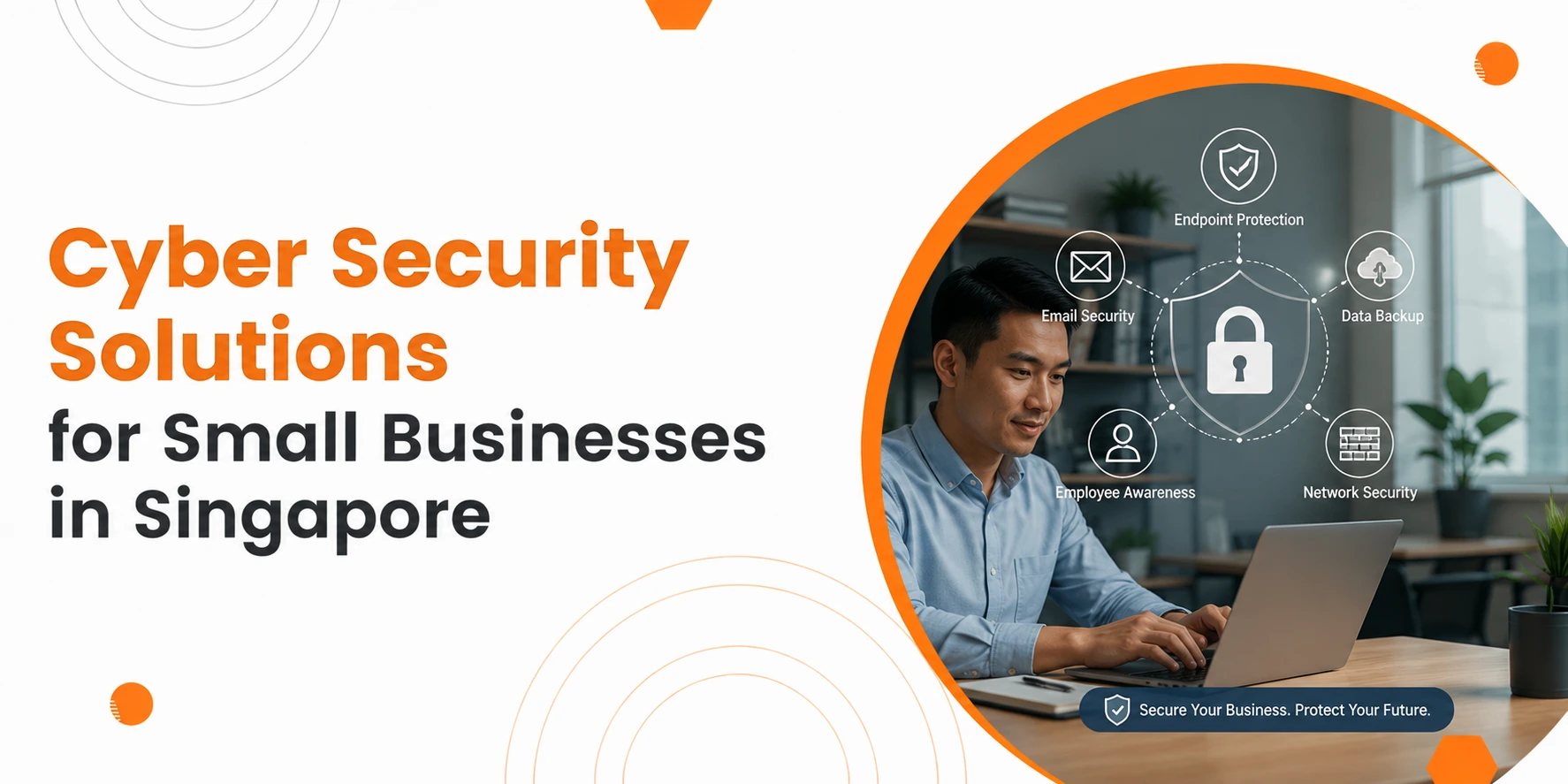
Cybersecurity solutions for small business help Singapore SMEs protect sensitive business and customer data, prevent costly cyberattacks, and meet PDPA compliance requirements. By investing in the right cybersecurity services for small business, organisations can strengthen their security posture, minimise operational disruptions, and safeguard long-term business growth without the need for enterprise-level budgets.
Whether you run a retail business, accounting firm, healthcare clinic, logistics company, or technology startup, investing in the right cybersecurity solutions for small business is no longer optional, but it’s an essential part of protecting your operations, customers, and reputation.
In this guide, we’ll explain the risks facing Singapore’s SMBs, the most important security services to consider, realistic cost expectations, and how choosing the right cybersecurity partner can help your business stay secure without overspending.
Build Custom Software That Fits Your Business
From CRM to inventory systems — we design solutions around your workflow, not the other way around.
Why Small Businesses in Singapore Are at Risk
Small businesses in Singapore are attractive targets because they often have limited cybersecurity resources while storing valuable customer and financial information.
Weak security controls, supply chain exposure, and PDPA compliance responsibilities further increase their cyber risk.
1. Limited IT and Security Resources
Small businesses encounter multiple security threats because they do not operate dedicated cybersecurity teams, which results in their systems running with outdated software and their users choosing weak passwords while maintaining insecure wireless networks, and they fail to perform proper data backup procedures.
2. Valuable Customer and Business Data
Small businesses keep dangerous customer data, employee records, and financial details, which criminals can use to perform fraudulent activities, steal identities, or spread ransomware infections.
3. Supply Chain and Vendor Attacks
Attackers select small suppliers as their targets because this strategy enables them to reach vital information that belongs to major organisations, which need better vendor security protection.
4. PDPA Compliance Responsibilities
Businesses operating in Singapore have to follow PDPA rules, which require them to protect the personal information of individuals. The combination of weak cybersecurity defenses and operational systems leads to regulatory penalties that harm company reputation and destroy customer trust in the business.
What are Common Cyber Threats Facing Small Businesses
The most common cyber threats facing small businesses include phishing attacks, ransomware, weak password management, and third-party vendor risks.
Understanding these threats helps business owners implement effective security measures before attacks occur.
Phishing Attacks
Fraudulent emails that pretend to be from reliable organizations seek to obtain passwords and banking information while they attempt to spread malicious software. The attackers use deceptive methods to make employees process payments that turn out to be bogus.
Ransomware
Ransomware attacks result in business file encryption, which forces organizations to pay ransom fees while their operations become inactive and their data becomes inaccessible, and their recovery expenses multiply because their backup systems lack sufficient protection.
Weak Passwords and Credential Management
Attackers can enter business systems through shared passwords, weak passwords, and password reuse, and accounts that lack Multi-Factor Authentication (MFA) protection.
Third-Party and Vendor Risks
Your business faces security vulnerabilities because cloud platforms, payment providers and IT vendors do not maintain proper security measures.
Businesses need to perform regular vendor security evaluations because this practice helps them reduce their risk exposure.
What “Right-Sized” Cyber Security Looks Like
Right-sized cybersecurity focuses on providing the level of protection a small business actually needs without the complexity or cost of enterprise-grade solutions. It combines essential security controls that reduce risks while remaining affordable and scalable.
The best cybersecurity solutions for small business are designed around actual business needs, not unnecessary complexity.
A right-sized approach focuses on:
- Protecting the most valuable assets
- Reducing common attack risks
- Meeting compliance requirements
- Supporting business growth
- Staying within budget
Rather than purchasing expensive enterprise platforms, SMBs benefit from layered security that provides practical protection.
Think of cybersecurity as building multiple locks on your business instead of relying on a single door. If one control fails, others continue protecting your systems.
Read Out: Cyber Security Services in Singapore: Strategies to Safeguard Your Business
What are Core Cybersecurity Services Small Businesses Should Consider
Choosing the right cybersecurity services for small business depends on your business size, industry, and risk level. The following services provide strong protection for most Singapore SMEs.
1. Vulnerability Assessment and Penetration Testing (VAPT)
VAPT identifies and tests security weaknesses before cybercriminals can exploit them, helping businesses prioritise risks and strengthen their defences.
2. Managed Security Services
These services provide continuous monitoring, threat detection, endpoint protection, security updates, and incident response without the cost of a full-time security team.
3. Firewall and Network Security
The network defense system of modern firewalls establishes security through its ability to block dangerous network traffic while stopping unauthorised entry attempts and maintaining protection for users who work remotely and their devices that connect to the network
4. CISO-as-a-Service
Security planning, risk management, compliance and policy development services become available to businesses through experienced cybersecurity leadership which they can access whenever they need it.
5. Security Awareness Training
Organisations must provide regular training to their staff members because it stops phishing attacks from succeeding and teaches employees to create strong passwords while reducing human mistakes through improved cyber knowledge.
6. Backup and Disaster Recovery
Organisations can recover rapidly from ransomware attacks, hardware breakdowns, accidental data loss and other operational disruptions through their automated backup system, which includes encryption and regular testing.
What Cybersecurity Actually Costs
Cybersecurity costs vary depending on business size and security requirements. Most Singapore SMEs can choose from affordable one-time assessments, monthly managed security services, project-based engagements, or flexible CISO-as-a-Service plans that fit their budget. Below are some common options:
One-Time Assessments
Suitable for businesses looking to understand their current security posture.
Examples include:
- Vulnerability assessments
- Penetration testing
- Security audits
- Risk assessments
These projects help identify weaknesses before investing in ongoing improvements.
Monthly Managed Services
Subscription-based cybersecurity services typically include:
- Continuous monitoring
- Threat detection
- Endpoint protection
- Security updates
- Reporting
This predictable pricing makes budgeting easier while ensuring ongoing protection.
Project-Based Engagements
Businesses undergoing digital transformation or compliance initiatives may require specialised security projects, such as:
- Cloud security reviews
- Network redesign
- Compliance readiness assessments
- Security architecture consulting
Virtual Security Leadership
CISO-as-a-Service offers strategic expertise without the expense of employing a full-time executive.
Ultimately, the cost of prevention is often far lower than the financial and reputational impact of recovering from a successful cyberattack.
How to Choose the Right Cybersecurity Partner
Small businesses need to find the right cybersecurity provider because not all security companies meet their specific needs. So, the process of selecting service providers requires evaluation of their ability to meet essential selection standards.
The service provider must recognise essential business requirements that Singapore-based Small and Medium Enterprises (SMEs) need to operate successfully.
- Businesses must provide adaptable solutions that expand their operations to match your company’s increasing needs. The service providers deliver useful advice that customers can understand, but they avoid using complex technical language.
- The provider must have prior experience with security needs that relate to PDPA regulations.
- The organisation offers monitoring services that detect issues before they occur and provides help through their support team.
- The business creates customised solutions for customers instead of offering them items that they do not need. Your business needs a cybersecurity partner that functions as a business unit to defend your company while
How Genic Solutions Helps Singapore SMBs
At Genic Solutions, we understand that small businesses need practical cybersecurity—not overly complex enterprise systems.
Our approach focuses on delivering scalable, cost-effective cybersecurity solutions tailored to each organisation’s size, industry, and business objectives.
Our services include:
- Vulnerability Assessment and Penetration Testing (VAPT)
- Managed Security Services
- Firewall and Network Security
- Cloud Security
- Security Awareness Training
- Risk Assessments
- CISO-as-a-Service
- Compliance-focused security consulting
Rather than offering one-size-fits-all packages, we work closely with clients to identify the most significant risks and implement solutions that provide measurable protection without unnecessary complexity.
Whether you’re starting your cybersecurity journey or looking to strengthen your existing security posture, our team helps businesses build resilience against today’s evolving cyber threats.
Check Out: Cyber Security Solutions for SMEs: Choosing the Right Protection Framework
Final Thoughts
Overall, Cybersecurity services for small businesses have become a vital business requirement that now extends past its original function as an IT department responsibility. The ever-changing cyber threats create rising security threats for Singaporean small businesses through phishing attacks, ransomware attacks, credential theft, and supply-chain breaches. The good news is that protecting your business doesn’t require enterprise-level budgets or complicated technology.
Small businesses need cybersecurity solutions that work for their business requirements while providing security and growth potential and budget-friendly options. Small businesses can achieve better customer trust by protecting their data through security systems that also help them meet PDPA requirements. Small businesses need specific cybersecurity service combinations that include vulnerability testing, managed security services, firewall protection, and employee awareness training to protect their operations while they build their business foundation.
Genic Solutions provides cybersecurity protection to SMBs through their experienced security team, which delivers customised solutions for Singapore businesses. Genic Solutions provides proactive cybersecurity protection to businesses through their expert security guidance, which enables companies to concentrate on their operations with enhanced peace of mind.