

What is Web Application Penetration Testing?
Introduction
In the digital realm, security stands as a beacon of trust. Web Application Penetration Testing, or ‘pen testing’, shines a light on potential vulnerabilities in web applications. It’s a simulated cyber-attack, a proactive approach to identify and fix security gaps before they’re exploited by malicious actors.
The Essence of Pen Testing: Strengthening Web Security
At its core, website penetration testing serves a dual purpose. It is both a shield and a scout. The process not only uncovers weak spots but also fortifies an application’s defences against cyber threats. For businesses, having faith in their digital infrastructure is just as important as protection.
A pen test goes beyond simple analysis. It actively engages with web applications, attempting to breach defences just as a real attacker would. The outcome? Improved security protocols that are resistant to the constantly changing cyber threats.
The Necessity of Web Application Penetration Testing
Web applications are the storefronts of the modern business world. They hold valuable data that, if compromised, could spell disaster. Web penetration testing is not just important; it’s indispensable in our interconnected digital ecosystem.
- Unearthing Vulnerabilities
Cybersecurity is a race against time. Vulnerabilities in web applications can be like hidden landmines, waiting to detonate. Pen testing meticulously identifies these hazards, ensuring they’re rendered harmless.
- Mitigating Digital Risks
Every vulnerability detected is a disaster averted. Penetration testing doesn’t just find weaknesses; it provides a roadmap for remediation, significantly reducing the risk of security incidents.
Read More – 10 Most Critical Web Application Vulnerabilities & Prevention
The Website Penetration Testing Lifecycle
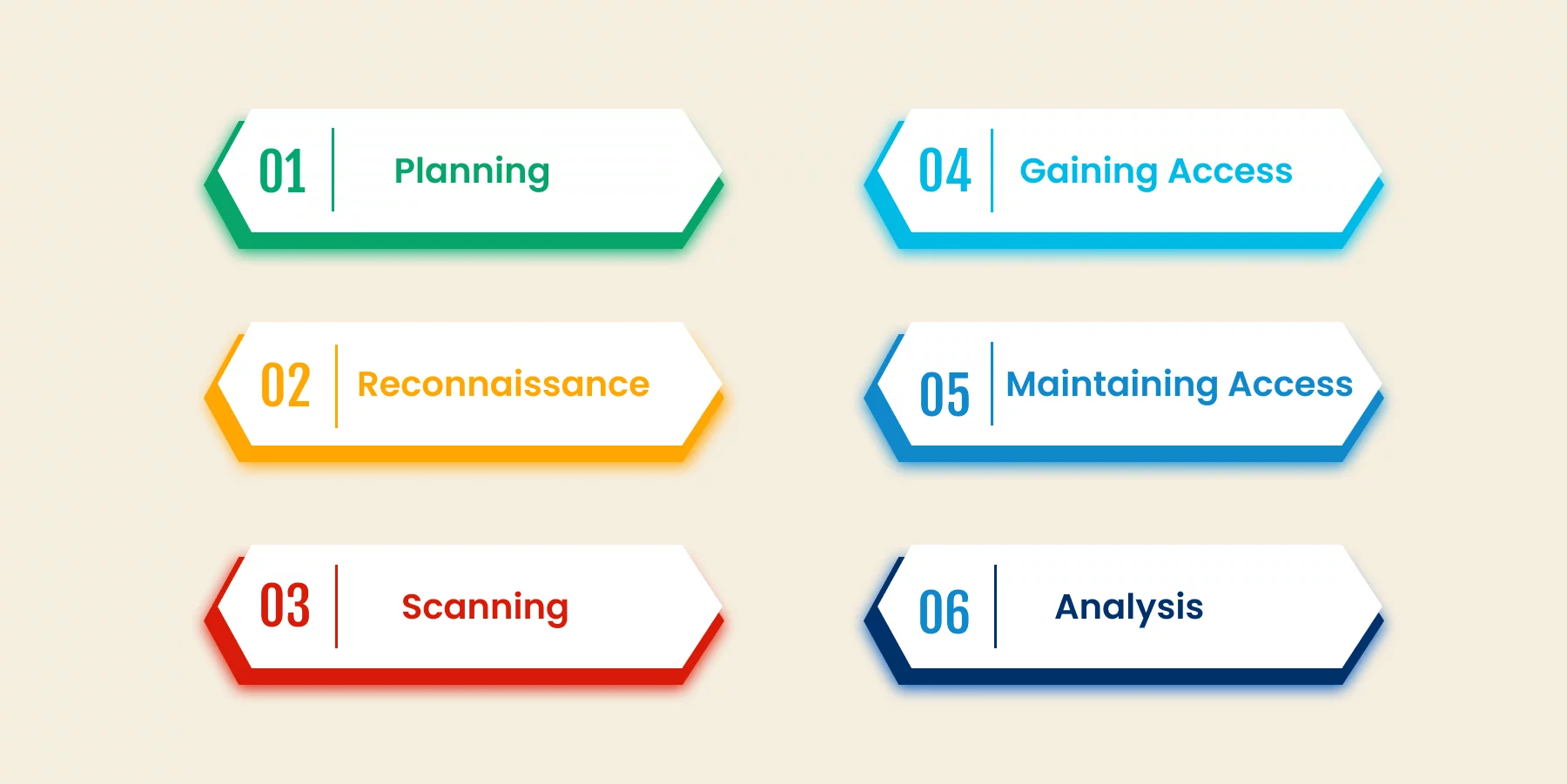
Web application penetration testing is meticulous, it unfolds in a series of strategic steps designed to mimic an attacker’s approach, only to fortify the defences it tests.
Step-by-Step to Security
Here’s a snapshot of the pen testing process:
- Planning: This is where goals are set, and scopes are defined. It’s a phase of strategy and scope.
- Reconnaissance: It’s all about information gathering. Your ability to test will improve the more you know.
- Scanning: This phase is about probing and understanding how the application responds to intrusion attempts.
We use two analysis methods here:
Static: Reviewing code without executing it to predict behaviour.
Dynamic: Inspecting the app’s operations in real-time for a more practical insight.
- Gaining Access: This is the attack phase, where vulnerabilities are actively exploited to see how deep an attacker could penetrate.
- Maintaining Access: The tester tries to stay in the system, simulating a persistent threat.
- Analysis: Finally, findings are collated, vulnerabilities mapped, and recommendations formulated.
The Human Element
Behind each step is a team of dedicated professionals. They bring expertise, intuition, and creativity to the process. This human element ensures that pen testing goes beyond algorithms, reaching into the realm of insightful cybersecurity.
Types of Penetration Tests
Website penetration testing takes many forms, each designed to assess a different aspect of web application security.
The External and Internal Divide
- External Tests: These focus on publicly accessible elements like the web application itself.
- Internal Tests: Here, the simulation is from the inside, akin to an insider threat.
The Unseen Attack Scenarios
- Blind Tests: Testers have minimal information, mirroring an attacker’s knowledge.
- Double-Blind Tests: In these, even the security teams are unaware of the test, offering a real-time response scenario.
Each type of test offers unique insights, strengthening different layers of an application’s security.
Detailed Web Application Penetration Testing Phases
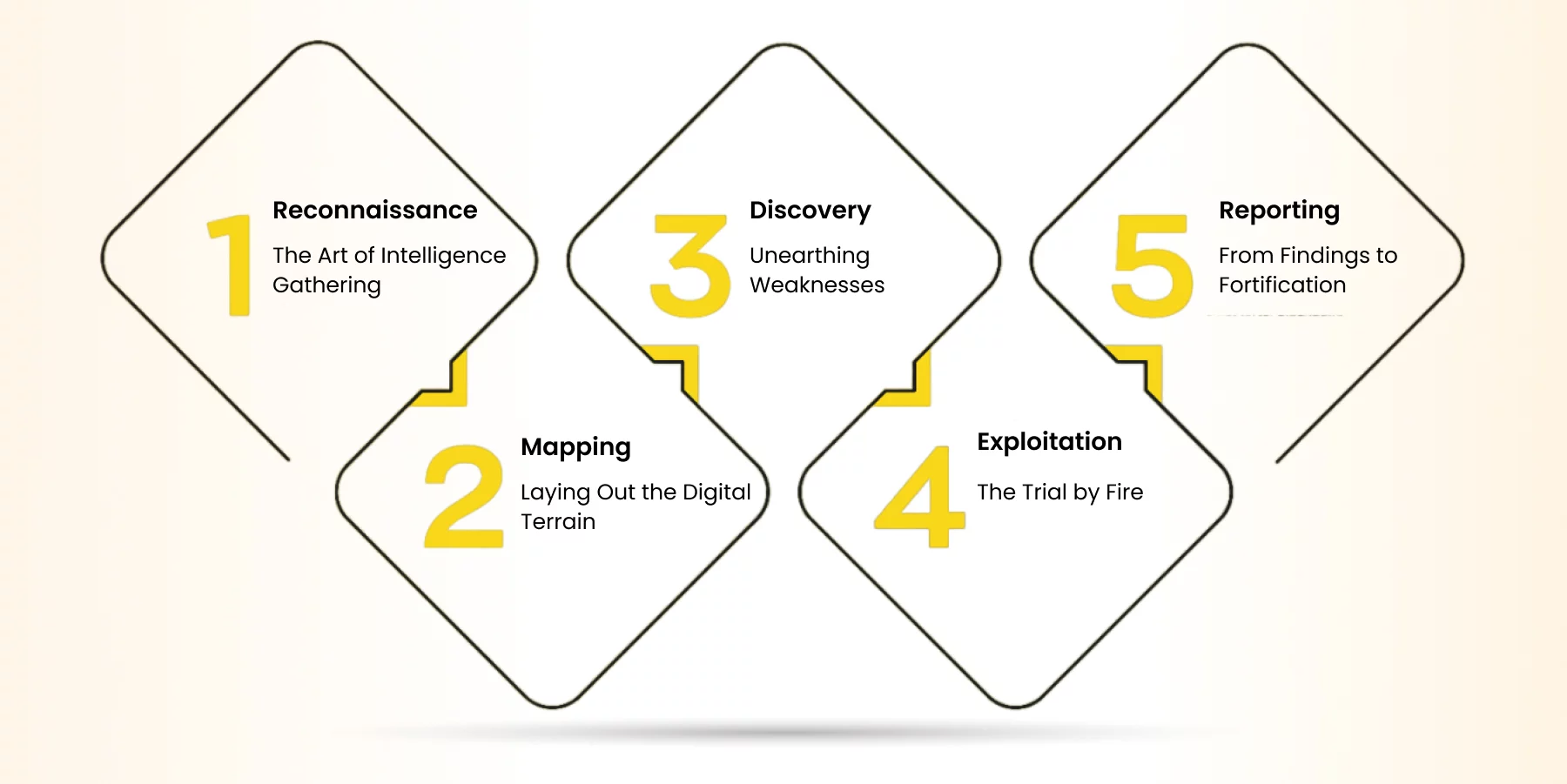
Web penetration testing unfolds in several critical steps, each a cornerstone in fortifying web application security. Here is an overview of this diligent activity:
Reconnaissance: The Art of Intelligence Gathering
Before a pen tester can shield a system, they must first understand it. This initial phase, reconnaissance, involves collecting vital information about the target system. It’s split into two approaches:
- Passive Reconnaissance: Here, testers gather data quietly, without alerting the target system, much like a detective sifting through public records.
- Active Reconnaissance: This is a more direct approach, where testers interact with the system to gauge its response to different probes and inquiries.
Mapping: Laying Out the Digital Terrain
Mapping follows, where testers draw out the network’s blueprint. They identify how components connect and the security measures in place. It’s akin to creating a map of a fortress before planning a defence strategy.
Discovery: Unearthing Weaknesses
In discovery, testers use the mapped information to pinpoint vulnerabilities. Think of it as searching for cracks in the fortress walls.
Exploitation: The Trial by Fire
Exploitation is where testers gently push against the found vulnerabilities, testing if they can indeed be breached. They may craft attacks like SQL injections to simulate potential threats.
Reporting: From Findings to Fortification
After the test, it’s time to report. This document doesn’t just list vulnerabilities; it offers a path to resilience, ranking issues by severity and suggesting actionable fixes.
Also Look – Software Development Company
Website Penetration Testing Tools
A variety of technologies are used in penetration testing, each with a specific purpose—simulating various cyberattacks or gathering vital data.
For example:
- Nmap helps identify open ports and running services.
- Wireshark allows in-depth protocol analysis and real-time traffic capture.
- Metasploit offers a framework for developing custom tests.
It’s not just about having these website penetration testing tools at your disposal but knowing when and how to deploy them effectively that makes a penetration test successful.
Web Penetration Testing Certifications
In the realm of cybersecurity, certifications aren’t just letters after your name; they are a testament to a professional’s expertise.
Certifications like Certified Ethical Hacker (CEH) or Offensive Security Certified Professional (OSCP) signify a thorough grounding in penetration testing principles. They validate a tester’s ability to not just identify vulnerabilities but also think one step ahead of cybercriminals.
In the ever-evolving landscape of web security, these certifications become beacons of trust and proficiency.
How Genic Solutions can help
Genic Solutions tests web and mobile applications against the OWASP Top 10 and beyond, including the APIs behind them. Our testers show you how each weakness could be exploited, how to fix it, and confirm the fix with a retest.

Genic Solutions Team
Cyber security specialists, Singapore
Genic Solutions is a Singapore cyber security company. Our consultants and testers deliver penetration testing and VAPT, managed SOC, security solutions and compliance support for organisations across Singapore, and write these guides from that hands-on work.
Related articles
All articles
Penetration testing 8 min read
Black Box vs White Box vs Grey Box Penetration Testing
Understand the difference between black box, white box, and grey box penetration testing methodologies — and which one fits your organisation.
Read
Penetration testing 8 min read
Mobile App VAPT in Singapore: Secure Your iOS & Android Applications
Discover mobile app VAPT services in Singapore. Secure your iOS and Android apps with vulnerability assessment and penetration testing.
Read
Penetration testing 7 min read
Penetration Testing in Singapore: Costs, Process & How to Choose the Right Provider
Discover penetration testing costs in Singapore, how the testing process works, and how to choose the right cybersecurity provider for your business.
Read